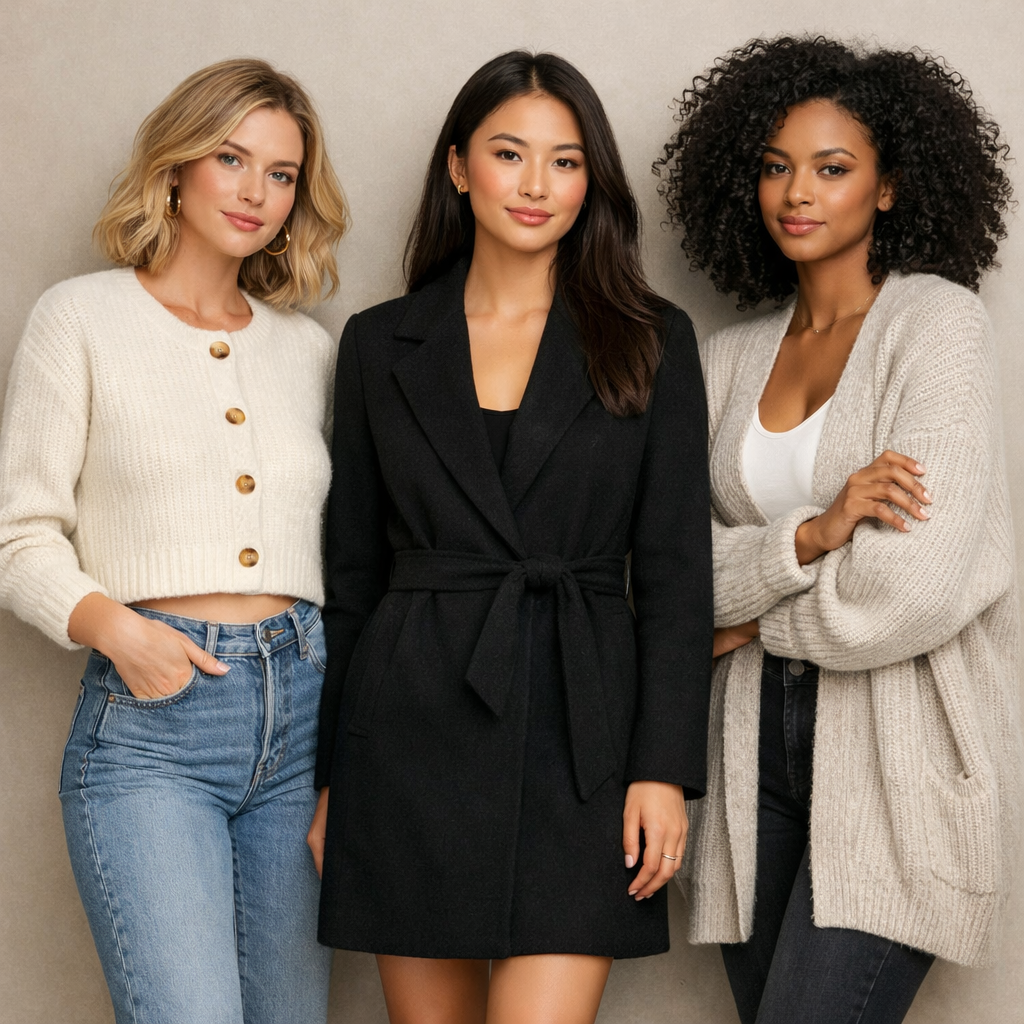
Affordable To Luxe Coatigans: Trusted Retailers And Fit Tips
Looking for cardigans that double as outerwear? This Wear Style Corner guide maps the best places to find an affordable coatigan or a luxury coatigan, plus the fit, fabric, and return-policy know‑how that actually prevents misbuys. At Wear Style Corner, we distill editor testing, fiber science, and real-world sizing to help you pick a longline or duster-style coatigan that works for campus commutes, office days, travel, and game-day layering. Expect clear quality signals, easy styling formulas, and retailer picks across budgets—from value private labels to luxe boutiques—so you can shop smart, try on strategically, and keep what you love.
What is a coatigan
A coatigan is a hybrid coat and cardigan—mid to long in length, usually open-front, knit from insulating fibers—made to layer like a sweater yet deliver coat-like coverage and structure. Three-quarter to knee-length options cover torso and lower thigh, varying by height and intended layers and footwear choices. Based on this guide to coatigans and Aran knits
Functional traits that make cardigans serve as outerwear: open fronts, straight fits that slide over layers, and medium-to-structured knits that keep their line—a set of year‑round staples that travel well, per the resource above and Travel + Leisure’s editor-tested cardigan roundup. Quick distinctions: a longline cardigan typically hits mid‑thigh; a duster cardigan extends closer to the calf; a coatigan uses denser, more structured knits suited to light outerwear.
Who this guide helps
This is for students, alumni, fans, and gift‑givers who need reliable, packable layers for stadium walks, frigid classroom AC, and weekend trips—plus clear sizing and return policies for confident online orders. We call out petite, tall, and plus-size coatigan pointers (see Fit and proportion basics) and focus on versatile neutrals that anchor travel and capsule wardrobes. Wear Style Corner’s stance is simple: independent recommendations, authenticity checks where school gear is involved, material performance you can feel, and return-policy literacy that saves time and money.
How to assess coatigan quality
Use these fast checks to judge construction and warmth in-store or from a product page. These checks mirror Wear Style Corner’s in‑house review criteria.
Quality Signals Checklist
| Signal | What to look for | Why it matters | Quick test |
|---|---|---|---|
| Fiber content | Merino, Aran wool, cashmere, or high wool blend | Better insulation and drape | Confirm percentage; avoid low-wool blends if you want warmth |
| Knit density | Tight, uniform stitches; minimal show-through | Warmer, less sagging | Hold to light; denser knits block light |
| Collar/edge structure | Ribbed or faced edges; stand or shawl collars | Keeps shape, frames outfits | Gently tug edge; it should recover |
| Seams and hems | Clean seaming, reinforced pockets | Longevity and shape retention | Check pocket mouths don’t bow |
| Closures | Buttons/snaps align; belt loops secure | Function without distortion | Fasten; fabric shouldn’t pull |
| Care tag | Clear care with fiber-appropriate methods | Predicts lifecycle cost | Dry-clean-only raises upkeep |
At‑a‑glance: Aran wool refers to traditional Irish cable patterns often knit in lofty wool; those raised stitches trap tiny air pockets that act as natural insulators for surprising warmth (as outlined in the sweatershop guide linked above).
Fit and proportion basics
- Length: Three‑quarter to knee-length coatigans cover the midsection and lower thigh/knee depending on height; pair hemlines to your base layers and boot or sneaker height to avoid chopping the leg line (see source linked in What is a coatigan).
- Silhouette: Straight, open-front cuts layer cleanly over tees to light sweaters; intentionally oversized fits read slouchy—size down if you want a neater line, a tip echoed by Travel + Leisure’s testers.
- Plus-size note: Aim for vertical lines and open fronts; avoid extremes (too tight or billowy) to maintain balance, a fit approach consistent with advice in Wardrobe Oxygen’s retailer guide.
Fabric, warmth, and care tradeoffs
Merino and Aran wool insulate efficiently; Aran’s textured construction traps air, boosting warmth. A merino wool cardigan offers breathable, versatile comfort, while a cashmere cardigan brings plush softness and light-but-warm insulation. Synthetics and blends are often easier-care and budget-friendly but may trade off longevity and pilling resistance (see sweatershop guide above).
Care realities: Luxe fibers often require hand wash or dry cleaning; factor cleaning time and fees into total value. Style pros frequently flag dry-clean tags on delicate knits in posts like this industry stylist reel.
Definition: Lifecycle cost = purchase price plus ongoing care (cleaning, de‑pilling, storage) spread across years of wear.
Budget to premium shopping strategy
Retail analysts forecast a widening luxury–value gap into 2026; luxury sales are projected to rise about 5.5% worldwide even as many shoppers stay price-conscious, according to eMarketer’s 2026 retail outlook. Wear Style Corner uses a lifecycle lens—price, care, and expected wears—to guide picks. Use this three-step flow:
- Define use case: daily campus wear, travel cardigan, office layer, or game-day outer knit.
- Set a lifecycle budget: item price + care + expected wears.
- Choose channel: private labels/resale for value; go luxe when fabric grade, fit, and longevity justify it. Expect private labels, resale, and rentals to keep growing (per the outlook above). Always try with intended outfits and verify size charts and return windows.
Budget vs Luxe Tradeoffs
| Aspect | Budget Value | Premium Investment |
|---|---|---|
| Fiber grade | Wool blends; entry merino | High‑grade merino, cashmere |
| Knit density | Varies; may be lighter | Consistently dense, shaped |
| Construction | Simple seams/edges | Faced edges, reinforced pockets |
| Care | Often machine-washable | Hand wash/dry clean |
| Fit consistency | Can vary by batch | More consistent across sizes |
| Long-term cost | Lower upfront | Lower cost per wear if durable |
Trusted affordable retailers
Start with Wear Style Corner’s up‑to‑date shortlists and size notes, then compare the retailers below. Editors and community picks consistently flag Everlane, Quince, J.Crew, and Lands’ End for value and frequent promos; Quince leans into luxe fabrics at lower prices and often runs true to size, while Lands’ End sale events make capsule-building under $200 realistic (per Wardrobe Oxygen’s retailer guide). Travel testers at Travel + Leisure also highlight J.Crew cardigans for durability and packability—useful cues when filtering for cardigans that double as outerwear.
Shopping tactics:
- Monitor private-label drops and seasonal sales.
- Filter by fiber content (merino, Aran wool, cashmere) and read care tags.
- Prioritize clear return policies and free label options to reduce risk.
Trusted mid tier retailers
Use Wear Style Corner’s fit notes and return-policy snapshots to narrow your shortlist. Travel + Leisure’s editors include Reformation among versatile travel layers, and note Cozy Earth’s oversized classic cardigan as hefty, warm, and a “size down if slouchy” candidate—good signals for structured, outerwear-adjacent knits. Community-cited brands like Vince and Rails, frequently praised for fabric feel and polish in Wardrobe Oxygen’s overview, often deliver office-to-weekend mileage. Focus on structured collars, belted or buttoned styles for definition, and mid-lengths that function almost blazer-adjacent.
Trusted luxe and contemporary retailers
Check Wear Style Corner’s curation when you’re weighing a splurge against fabric grade and care demands. If you prioritize provenance, drape, and lasting shape, editor favorites such as Vince and Jenni Kayne appear repeatedly in Travel + Leisure’s testing. With some consumers splurging while others stay value-led, be selective and ensure each piece earns the spend (see eMarketer’s outlook). Do diligence: confirm fiber grade, knit density, and care needs—and ask boutiques about return windows and alteration support.
Smart resale and secondhand sources
Wear Style Corner highlights secondhand finds with clear fiber tags and notes on wear so you can assess condition quickly. Curated resale marketplaces and local consignment shops are prime for merino or cashmere finds in classic colors at better price-performance. Expect continuing traction in resale as shoppers chase value (per eMarketer’s forecast above). When secondhand sourcing, note that marketplaces’ growth is running about six times faster than traditional department stores, improving discovery efficiency, according to Insider Trends analysis.
Inspection checklist:
- Check pilling at elbows and side seams.
- Test pocket mouths for stretch; inspect seam integrity.
- Verify fiber tags; measure sleeve and length against a favorite layer.
Styling formulas for work, travel, and game day
- Work: Structured-collar coatigan + fine-gauge knit or blouse + tailored trousers. Button or belt for waist; mid-length reads blazer-adjacent (see sweatershop guide).
- Travel: Open-front, straight-fit coatigan for easy on/off; pick packable, durability-tested knits; neutrals mix widely (per Travel + Leisure editors).
- Game day: Longline coatigan over a collegiate tee/jersey with a thermal base; choose insulating merino or Aran construction for stadium temps (see sweatershop guide).
Sizing accuracy and returns checklist
Follow this five-minute process before you click buy—it’s the same workflow Wear Style Corner editors use:
- Measure a best-fitting layer (shoulders, sleeve, length).
- Compare to garment specs; consider oversized notes and size down if slouchy (a frequent editor tip in T+L tests).
- Match size to intended layering thickness (tee vs sweater).
- Verify return window, fees, and label policy before purchase.
- Document unboxing; keep tags until fit is confirmed.
Height-to-Length Guide
| Height | Recommended lengths | Notes |
|---|---|---|
| Under 5'2" | Hip to 3/4 | Avoid calf-length dusters that overwhelm |
| 5'2"–5'6" | 3/4 to just above knee | Versatile for flats and ankle boots |
| 5'7"–6'0" | 3/4 to knee | Balances proportions with most footwear |
| Over 6'0" | 3/4 to mid‑knee | Maintains coverage without skewing short |
Note: 3/4 to knee coverage varies by height, as outlined in the sweatershop guide.
NCAA licensed picks and authenticity checks
Officially licensed NCAA apparel is approved by a university’s rights holder, using verified logos, colors, and marks. Authentic pieces include authorized branding, consistent colorways, and retailer documentation, protecting buyers from counterfeits while ensuring a share of revenue supports schools and student-athlete programs through licensed channels and audits. Wear Style Corner flags licensed listings and calls out return-policy details where available.
Authenticity checklist:
- Look for hologram/authorized tags and consistent team colors.
- Confirm the product page explicitly states “officially licensed.”
- Scan customer photos for logo accuracy; check return policies for hassle-free exchanges.
Stadium layering idea: Neutral coatigan over licensed tee or hoodie; pick insulating fibers (merino or Aran-style textures) for cold games, per the sweatershop guide.
Frequently asked questions
Are coatigans warm enough for winter or just shoulder seasons
Many are warm enough for mild winter days—especially merino or traditional Aran knits that trap heat. Check fabric density and fit, and use Wear Style Corner’s notes to match your climate.
How should a coatigan fit in shoulders sleeves and length
Shoulder seams should meet your shoulder points, sleeves hit the wrist bone, and length run from three‑quarter to knee based on height and layers. If a style runs oversized, size down for a cleaner line—Wear Style Corner flags this in product notes.
What fabrics feel warm but not itchy
Merino wool and cashmere are typically warm with a softer hand, and many Aran knits insulate well. For sensitive skin, try fine‑gauge merino or blended yarns and add a base layer; Wear Style Corner highlights these options.
Should I size up for layering or stay true to size
Stay true to size for straight, open‑front styles and light layers; size up only for bulky sweaters. If a brand runs oversized, sizing down can sharpen the silhouette—Wear Style Corner calls this out in fit notes.
How can I tell online if a coatigan is thick or thin
Check fiber content, knit gauge, and listed garment weight, plus reviewer notes on warmth and drape. Wear Style Corner compiles these cues—including stitch close‑ups and terms like “hefty” or “lightweight”—to signal thickness.