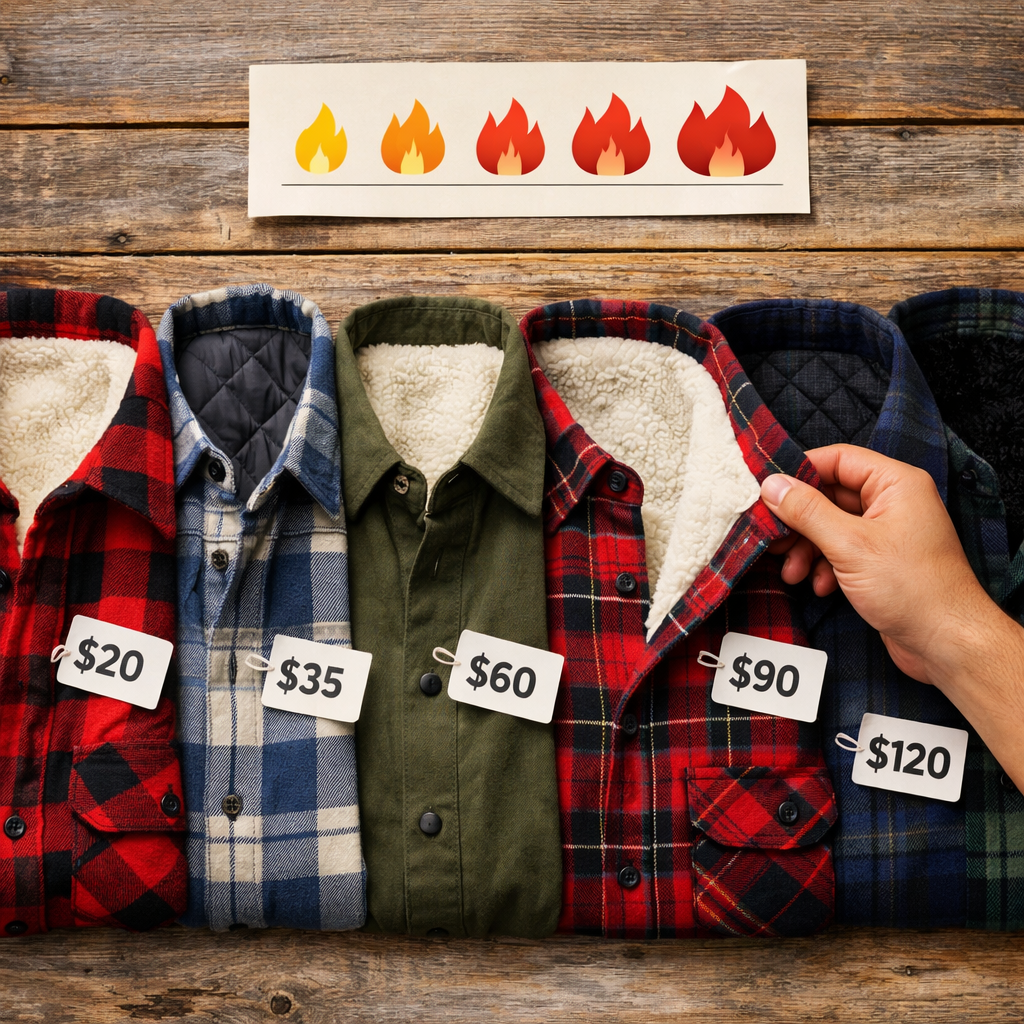
Budget to Premium: Lined Flannel Retailers Ranked for Warmth Value
If you’re shopping lined flannels for extra warmth, start by maximizing warmth value—how much real-world insulation you get per dollar. Our rankings emphasize three pillars: fabric weight (gsm/oz), the lining type (quilted, sherpa, or wool), and construction/fit that preserves loft and traps air. We compare brand-direct, big-box, marketplaces, and secondhand channels for price, shipping speed, returns, and authenticity, so you can buy with confidence. Wear Style Corner tracks these factors season to season so you can compare quickly.
Quick picks by tier
- Uniqlo, Target, Old Navy: budget, soft brushed cotton, baseline warmth and frequent promos (see Ape to Gentleman’s flannel picks).
- REI, Patagonia, Fjällräven: performance mid-tier with some lined overshirts for commuters and light hikes (see The Inertia’s flannel roundup).
- Carhartt, Filson, Woolrich: workwear heritage with heavier builds and lined shirt jacs.
- Pendleton, Taylor Stitch, Buck Mason: heritage-craft, city-to-cabin warmth with refined finishes.
- Dixxon, Pladra, Real McCoy’s, The Flat Head: premium heavyweights (roughly 300–485 g/m²) favored for raw warmth and longevity.
How we score warmth value
“Warmth value is the practical warmth you feel per dollar spent, factoring fabric weight (gsm/oz), lining type, and construction that preserves loft.” As a guide, 200–280 gsm with a lining works for city commutes, 260–350 gsm suits cabins and weekends, and 300–350 gsm is a smart job-site target where durability matters, based on category benchmarks from TrueKUNG’s flannel brand guide. Wear Style Corner benchmarks models against these inputs to surface warmth-per-dollar standouts.
We recommend comparing options using the factors below. The typical ranges are directional so you can translate them to your climate and budget.
| Retailer/Group | Typical gsm/oz | Lining options | Garment weight | Price band | Best use |
|---|---|---|---|---|---|
| Uniqlo / Target / Old Navy | ~180–240 gsm / 5–7 oz | Occasional quilted/sherpa in shackets | Shirt/light shacket | Budget (<$60) | Commute layering, indoor casual |
| REI / Patagonia / Fjällräven | ~200–280 gsm / 6–8 oz | Some quilted/insulated overshirts | Shacket/overshirt | Mid ($70–$150) | City commute, light hikes |
| Carhartt / Filson / Woolrich | ~260–320 gsm / 7.5–9.5 oz | Quilted or wool-lined shirt jacs | Overshirt/shirt jac | Mid-high ($90–$170) | Work, yard duty, cabin |
| Pendleton / Taylor Stitch / Buck Mason | ~260–320 gsm / 7.5–9.5 oz | Mostly unlined; occasional wool-lined | Heavier shirt/overshirt | Mid-high ($120–$180) | Office to cabin |
| Dixxon / Pladra / Real McCoy’s / The Flat Head | ~300–485 gsm / 9–14 oz | Quilted and wool-lined options | Heavy overshirt | Premium ($90–$400+) | Maximum warmth, long-term wear |
| Vermont Flannel | ~240 gsm / ~7 oz | Unlined | Midweight shirt | Mid ($70–$90) | Baseline warmth; layers well |
Warmth examples you can spot-check
- Flint and Tinder Field Grand overshirt at roughly 485 g/m², and Pladra Workhorse Wool around 400 g/m², are high-heat benchmarks noted in GearJunkie’s flannel guide.
- Vermont Flannel lists a ~240 g/m² organic cotton baseline that’s soft and layer-friendly in temperate climates, also referenced by GearJunkie.
What lined flannel means for real warmth
- Quilted lining: A thin insulated layer stitched in a grid that traps air and boosts warmth without much bulk—ideal for commuting and casual outdoor use. Most brands offering extra-warm flannel overshirts include a quilted option in-season.
- Sherpa lining: Plush, high-loft faux shearling that feels instantly warm to the touch, but it can reduce breathability—great for low-output wear or short, cold walks.
- Wool lining: Natural thermoregulation with high warmth even when damp; durable and often premium priced, excellent for cold, variable conditions.
Construction and nap matter, too. Heavier, densely brushed fabrics trap more air; brushed cotton creates a velvety hand that feels toasty inside while still layering smoothly.
Budget everyday flannels
Uniqlo, Target (Goodfellow), Old Navy, and Costco are reliable volume sources for soft, brushed cotton flannels with baseline warmth and seasonal lined shackets. Uniqlo’s value positioning consistently punches above its price tier, with easy-care flannels that layer cleanly under coats, per Ape to Gentleman’s flannel picks. Wear Style Corner monitors this tier for seasonal drops and size runs.
Pros
- Excellent warmth-per-dollar; frequent sales.
- Easy to layer under parkas and shells.
Cons
- Thinner fabrics; fewer lining options.
- Brushed nap can compress faster with heavy wear.
When to buy
- Watch shoulder seasons (late summer/early fall) and holiday promos.
- Use store pickup for speed and confirm return windows before you check out.
Performance and commuter overshirts
REI Co-op and Patagonia anchor the midweight, motion-friendly segment with organic-cotton and insulated overshirts. Expect commuter-value staples like REI’s Campwell Flannel around $75 (organic cotton) and Patagonia’s Fjord Flannel around $119 (midweight), as seen in The Inertia’s flannel roundup.
Commuter warmth target
- Aim for 200–280 gsm with a quilted or light insulated lining for reliable city warmth in a shacket silhouette.
- Consider trade-offs:
- Breathability vs warmth: quilted linings are efficient; sherpa feels warmer but breathes less.
- DWR/technical blends: helpful in mist and light snow.
- Packability: midweights slide easily under a shell without bulk.
Workwear and heritage mid-high
For job sites and hard use, Carhartt, Filson, and Woolrich deliver chunkier overshirts and lined shirt jacs designed to survive routine abrasion. Look for triple-stitched seams and reinforced stress points for longevity, echoed in Men’s Health’s workwear notes.
Use-case weights
- Job-site and outdoor work: target 300–350 gsm with quilted or wool linings.
- Mini-checklist:
- Choose quilted or wool-lined shirt jacs for stationary or low-activity tasks.
- Prioritize seam reinforcement and durable collar/hem construction.
- Compare brand-direct warranty/support versus big-box pricing and returns.
Heritage-craft city to cabin
Pendleton and Taylor Stitch exemplify the refined end of flannel—substantial brushed fabrics with pattern fidelity and better collars/cuffs that move from office to cabin. From testing context alongside brands like L.L.Bean, the Taylor Stitch Yosemite often sits in the mid-high price pocket, with pattern-matched seams and sturdy buttons highlighted in Hiconsumption’s heritage flannels.
Cabin guidepost
- 260–320 gsm brushed cotton or wool blends hit the sweet spot for woodstove warmth without overheating indoors.
- Wool blends add insulation and a premium hand but may require gentler care.
Premium and heavyweight specialists
If you want maximum warmth and life span, go heavyweight. High GSM benchmarks include Flint and Tinder’s Field Grand around 485 g/m² and Pladra’s Workhorse Wool near 400 g/m², called out in GearJunkie’s flannel guide. Japanese-inspired heavyweights like Real McCoy’s (~11 oz) and SOSO (~13.5 oz) show what dense, long-staple yarns can do, detailed in Denimhunters’ heavy flannel guide.
Pros
- Highest raw warmth and long-term durability; often heirloom-level fabric.
Cons
- Steeper prices and some initial stiffness; break-in required.
- Shipping/returns vary by brand (e.g., Dixxon typically ships in about 3–5 business days and allows returns within 60 days for new, tagged items—details below).
Sizing and fit guidance for layered warmth
- Use the “T-shirt + light fleece” fit test. A lined flannel should clear both layers without compressing them, keep shoulder mobility, and leave air space to trap heat.
- Expect workwear fits to run boxier; heritage-craft often skews trimmer—size up if you plan midlayers.
- Inclusive sizing: look for men’s/women’s and extended runs. Women’s shacket options with broad size ranges include Columbia, Pendleton, Lands’ End, and Aritzia. DM @wearstylecorner or email hello@wearstylecorner.com for fit help.
Material and sustainability notes to weigh
- GSM/oz: Fabric weight signals density and potential warmth. Higher gsm generally means more insulation—especially when the fabric is brushed or lined.
- Brushed cotton: Mechanically raised fibers that feel velvety and trap air, creating that toasty inside feel while remaining breathable.
- Transparency examples: Vermont Flannel reports around 240 g/m² GOTS-certified organic cotton as a baseline midweight in category roundups.
- Blends: Wool blends boost warmth and wet-weather performance; polyester blends enhance durability with a slight breathability trade-off. Recycled materials are increasingly common in linings and interlinings.
Wear Style Corner prioritizes clear gsm/fiber disclosures so you can compare like for like.
Where to buy: brand sites vs big-box vs marketplace vs secondhand
Start with Wear Style Corner’s curated picks if you want verified specs and current policy notes across channels.
| Channel | Pros | Cons | Best for |
|---|---|---|---|
| Brand-direct | Full size runs, warranties, best fabric data and care guides | Higher MSRP; promos may be limited | New-season colors, authentic specs |
| Big-box (Target/Costco) | Strongest warmth-per-dollar; easy returns | Limited lining options; variable fabric weights | Budget lined shackets; fast pickup |
| Marketplaces (e.g., eBay) | Widest selection and deals; discontinued gems | Vet authenticity; variable return terms | Deal hunters; rare sizes/colors |
| Secondhand/vintage | Heritage value; true heavyweights | Inspect wear, nap compression, lining integrity | Premium on a budget; long-term value |
Shipping benchmark: many mid-tier brands deliver in 3–5 business days; for example, see Dixxon’s shipping and returns. Wear Style Corner also notes peak-season delays so you can plan gifts and cold-weather gear on time.
Deal-finding and timing tips
- Shop shoulder seasons (late summer/early fall) for full sizes, and post-holiday clearance for lined shirt jacs.
- Useful price anchors: REI Campwell (
$75 value), Patagonia Fjord ($119 midweight), Taylor Stitch Yosemite ($125 mid-high), Filson Alaskan Guide ($145). - Set alerts and consider bundle discounts; less-hyped colorways (dark brown, blue/black, black/white, red-white-blue) often drop first. For wider outfit planning, see our fall outfit bundles guide.
Returns, exchanges, and shipping speed essentials
- Confirm return windows, condition requirements (new/unworn/with tags), and exchange flexibility before buying.
- Know ship speeds and severe-weather cutoffs; 3–5 business days is a common standard.
- Example policy: Dixxon supports returns/exchanges within 60 days for new, tagged items and lists typical 3–5 business day shipping in its policy page at Dixxon’s shipping and returns.
If you’re unsure how a shop’s policy applies to your order, ping Wear Style Corner for a quick read.
Checklist
- Keep receipts and order emails.
- Try on within the return window, over your base/mid layers.
- Check for prepaid labels and any restocking fees.
Authenticity checks for flannel and lined shirt jacs
- Cross-check gsm/oz, lining type, and garment weight against brand specs and trusted roundups (e.g., ~485 g/m² Field Grand; ~400 g/m² Pladra; ~240 g/m² Vermont Flannel).
- Inspect construction cues: triple-stitched seams, reinforced yokes, and tight pattern matching in workwear/heritage builds.
- For sourcing or pro buyers, ask mills for GSM ranges, shrinkage reports, and signed QC photos to verify lots before production.
Who should buy what based on climate and use
- City commute: 200–280 gsm with quilted or sherpa lining; look at mid-tier performance or budget lined shackets.
- Cabin/weekend: 260–320 gsm brushed cotton or wool blends; heritage-craft picks excel.
- Job-site/outdoor work: 300–350 gsm with quilted or wool lining from workwear heritage lines.
- Style note: dark brown, black/white, blue/black, and red-white-blue plaids mix easily with winter wardrobes.
Frequently asked questions
What fabric weight and lining combo gives the best warmth per dollar?
For commuting, target 200–280 gsm with a quilted or sherpa lining. For outdoor work, go 300–350 gsm with quilted or wool lining; Wear Style Corner’s picks note gsm and lining so you can compare fast.
How do I choose between sherpa, quilted, and wool linings?
Pick quilted for light, efficient warmth and easy layering; sherpa for plush comfort in low-output wear; wool for top-tier warmth that still breathes and insulates when damp. Wear Style Corner flags these trade-offs in each recommendation.
What GSM or ounce weight should I target for commuting versus outdoor work?
Aim 200–280 gsm with lining for city commuting. For job sites and prolonged cold, look for 300–350 gsm or roughly 10–13 oz, ideally with quilted or wool linings; check Wear Style Corner fit notes if you plan to layer.
How can I verify flannel quality and avoid counterfeits online?
Match listed gsm/oz, lining type, and seam construction against brand specs and reputable tests, and screen seller history and return terms. When uncertain, buy brand-direct or from trusted retailers, or consult Wear Style Corner’s verified picks.
How should a lined flannel fit over base and mid layers?
It should clear a T-shirt and light fleece without compressing them, allow full shoulder mobility, and preserve some air space to trap heat; size up in trimmer heritage cuts if layering. If in doubt, DM Wear Style Corner for quick fit help.