Collector’s Guide To Limited Edition Sports Apparel With Real Resale Potential
Limited edition sports apparel can be more than a flex—done right, it’s a liquid, data-backed asset. This guide shows you how to separate true limited editions from hype, build resale comps, verify authenticity, plan buys around drops, and preserve condition for future exits. We’ll also walk through channels, pricing formats, and timing so you can capture upside with less risk, plus shortcut tools from Wear Style Corner—verified retailer shortlists, brand store locators, and city shopping guides. If you want a collector’s guide to limited edition sports apparel with resale potential, start here—with Wear Style Corner.
Define true limited editions versus hype drops
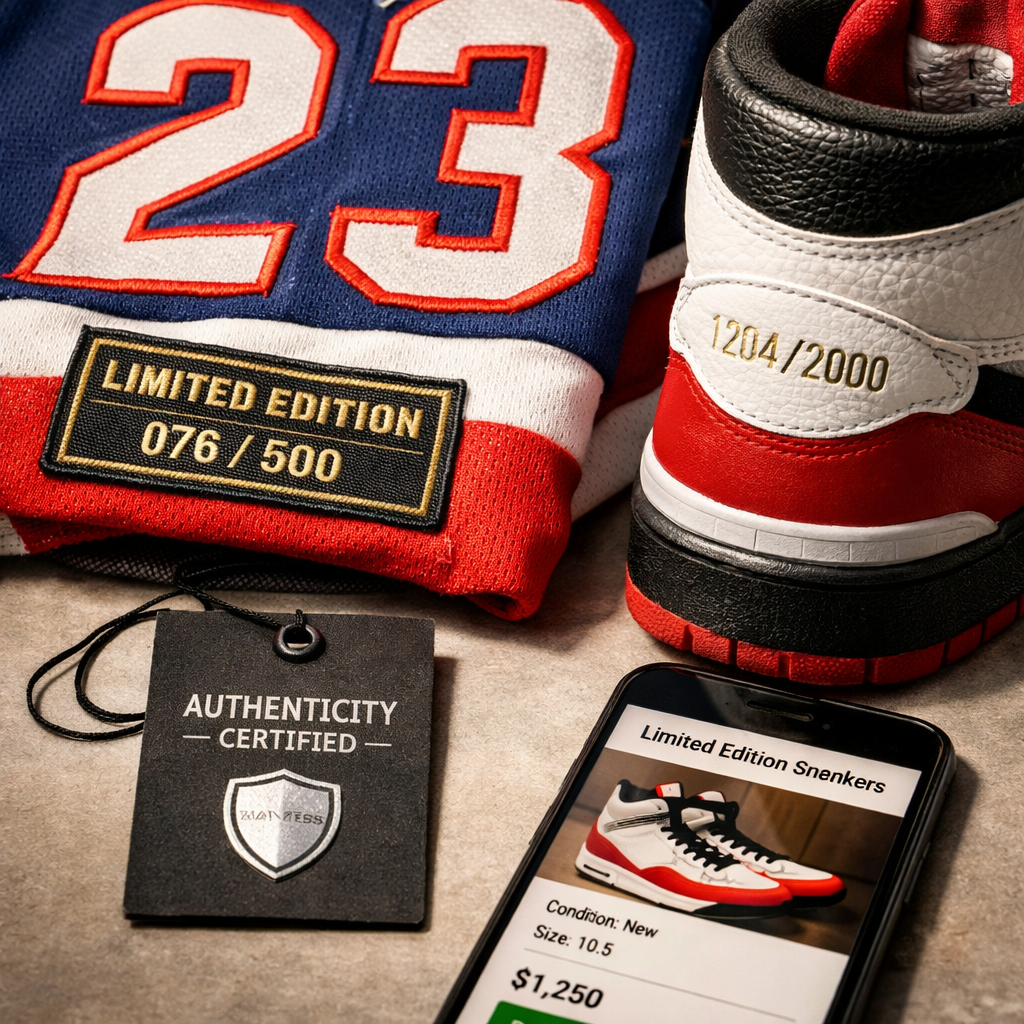
Not all “exclusives” are created equal. True limited editions are fixed-quantity releases with verifiable issuance; special editions are non-fixed variants or promos that mimic scarcity but can restock, diluting value. Limited edition vs special edition matters because real resale potential rests on documented rarity, licensed authenticity, and demand that outlasts a single drop. As a rule of thumb, prioritize licensed sports apparel with clear run sizes or serialized elements over vague “exclusive sportswear drops” with no numbers or paper trail. A practical definition: Limited edition apparel is a fixed-quantity release authenticated by the brand or league with documented run size, serialized elements, or certificates. Special editions are non-fixed variants or promos without guaranteed scarcity or issuance records, which weakens price floors over time (see the overview in the College Life guide to limited sports gear for buying fundamentals).
Quick signals to screen:
- Signs of true limited editions: numbered tags, league licensing marks, release notes with quantities, brand/league COA, and no restock language.
- Signs of hype-only drops: vague “exclusive” copy, no stated quantities, frequent restocks or color refreshes, and no official licensing or COA.
Build a resale baseline with comps and market data
Before you buy, set your floor and ceiling. Pull realized prices for similar items and athletes from major auction archives—Heritage and Goldin are reliable sources cataloged in The Realest’s selling guide—to benchmark entry points and likely exit ranges. For numbered apparel with cross-over collectibles (e.g., patches, signed pieces), consult population reports and grading databases; graded, sealed, serialized items typically sell faster because they reduce uncertainty, as outlined in the Intelligent Collector’s guide to grading. Keep broader context in view: the resale industry reached an estimated $44B in 2021 and could hit $70B by 2027; clothing is the most popular secondhand online category, with Nike and Coach among top sellers, per an Upright Labs report on secondhand retail.
Illustrative comps worksheet (replace with your pulled comps):
| Item | Release year | Edition size | Condition | Realized price (30/90/365 days) | Channel | Notes |
|---|---|---|---|---|---|---|
| Nike NBA All‑Star Warm‑Up Jacket (#/300) | 2023 | 300 | New with tags | $480 / $455 / $430 | Heritage; eBay | League hologram; serial tag matches release notes |
| Adidas Club Anniversary Kit (Special Edition) | 2022 | N/A | New | $140 / $135 / $120 | eBay | Non‑fixed run; lower scarcity |
| Mitchell & Ness Throwback Jersey (#/199) | 2021 | 199 | Authenticated | $350 / $330 / $300 | Goldin; eBay | COA included; numbered patch |
Notes:
- Always normalize comps by size, condition, and exact variant.
- Track 30/90/365-day trends to see momentum and seasonality.
Verify authenticity and provenance before you buy
Fraud kills liquidity. Confirm licensing, serialization, and provenance before you bid or checkout. Third-party authentication for signatures and game-use claims—PSA, JSA, and Beckett are the most used—adds trust and often improves sell-through, a standard mapped in The Realest’s selling guide.
Provenance is the documented history of an item’s origin, ownership, and usage. For sports apparel, this includes brand or league COAs, team letters, photos, serials, and receipts. Strong provenance reduces fraud risk, increases buyer confidence, and can command premium resale values.
Licensing and league marks to check
- Use Wear Style Corner’s verified retailers hub to find brand-direct and authorized stores with clean return policies; look for authorized retailer swing tags and COAs, and cross-verify with Wear Style Corner brand store locators and league shop lists.
- Verify official league shields, team crests with correct year tags, and manufacturer labels aligned to the season. League shop channels frequently emphasize authentication marks as value-add for buyers, underscoring why these details matter.
Serial numbers, tags, and holograms to confirm
- Capture serial numbers and hologram IDs and verify them against brand/league databases; materials and season codes on inner tags should align with release notes.
- Where applicable, tamper-evident holders and unique serials (as used in grading) increase trust and speed sales.
- Keep sharp photos of every identifier, plus receipts—these become the heart of your provenance file.
When to seek third‑party certification
Seek independent authentication when:
- Estimated item value exceeds $500
- Autographed elements are present
- There’s a game-used claim
- Provenance is incomplete or ambiguous
Photo-matching and team letters can substantiate use and command premiums. Major services: PSA, JSA, Beckett.
Choose the right channel and timing for purchases
Research pre-release details, set a firm budget, and account for tax/shipping (and duties for cross-border buys) before drop day. A product drop is a limited-time or limited-quantity release designed to create urgency and price discrimination; academic work on drops shows intertemporal pricing with measurable reseller impacts, per INFORMS research on limited-edition product drops. Time your entries: seasonal demand and player milestones can move prices. Avoid emotional FOMO buys—discipline helps preserve margins. Wear Style Corner’s city shopping guides and brand store locators make in-person pickups and verifications easier on drop day.
Document and preserve condition from day one
Treat every acquisition as if you’ll sell it. Record unboxing photos/video, save digital and paper receipts, and duplicate COAs. Store apparel in UV-protective cases or breathable garment bags, control humidity/temperature, and never handle autographs with bare hands. These conservation basics are echoed in the Nucleus Network fan’s guide to iconic equipment and help defend top grades later.
Original packaging and tags retention
- Keep original boxes, swing tags, tissue, barcodes, and branded inserts to preserve audit trails and maximize deadstock appeal.
- If you display the piece, store packaging separately in acid-free sleeves; photograph tag details for your listing folder.
- If resale is the goal, don’t cut tags or remove stickers.
Climate, UV, and handling controls
- Use UV-filtered display or storage; add silica packs and keep temperatures stable.
- Wear nitrile gloves for signed or delicate fabrics; avoid folding across signature or patch areas.
- Short checklist: UV case, climate log, gloves, archival tissue, breathable garment bag.
Decide when and where to sell for maximum liquidity
Auction archives suggest activity often peaks January–March, with December slower; plan premium consignments accordingly. Demand spikes are real: in one small-sample study, 70% of items sold higher while athletes were in-season, and listings using “rare” drew more bids and higher prices, per a BGSU leisure and business study. Track sell-through by channel and SKU to sharpen timing and cash flow—an apparel ERP primer explains how omnichannel visibility improves decisions and inventory turns.
Auction houses versus marketplaces versus consignment
- Auction houses (Heritage, Goldin): Best for ultra-rare or high-value items; trusted buyer pools and strong archival comps.
- Marketplaces (eBay, Facebook Marketplace): Broad reach and speed; targeted team/athlete hashtags can amplify demand, a tactic covered by Awesome Artifact’s selling tips.
- Your Shopify or curated consignment: Greater brand control and storytelling; weigh fees versus speed and measure sell-through to optimize mix.
Pricing formats and listing copy that convert
- Use auction-style listings with clear end dates to create urgency; set reserves from comps or start low to build momentum.
- Lead with verifiable facts in bullets: edition size, serial/hologram, authentication service, condition, inclusions (box/tags/COA).
- Include accurate, SEO-friendly terms such as numbered, photo-matched, league-authenticated, and rare when they’re provable; research suggests descriptors like “rare” correlate with more bids in sports memorabilia markets.
Wear Style Corner insider maps and verified retailer shortlists
We make safer collecting simpler with verification-led tools: brand store locators, city shopping guides, and verified retailer shortlists that filter for build quality, inclusive sizing, sustainability, and return policies. Explore our picks of must-have limited jerseys, our guide to brands behind exclusive drops, and a curated path to authentic licensed apparel via our online sports store tag and college merch hub for campus-specific releases.
- Start with our jerseys shortlist: 5 must-have limited edition jerseys for serious collectors.
- Learn the labels fueling exclusive sportswear drops: 10 must-know brands for exclusive sportswear drops in 2025.
- Shop safer with verified retailers: browse our online sports store tag.
- Hunting collegiate collabs? See our college category.
Brand store locators and city shopping guides
Mini flow for smoother buys:
- Check Wear Style Corner brand store locators for local stock and holds (same-day pickup beats shipping risk).
- Call to confirm edition size and hold window.
- Verify tags, holograms, and serials in person.
- Complete purchase and save a fully itemized receipt with photos.
When to buy brand‑direct, authorized retail, or authenticated secondhand
- Brand-direct: first access, guaranteed authenticity, clean documentation (find locations via Wear Style Corner store locators).
- Authorized retailers: competitive pricing and promos; watch return windows (cross-check with Wear Style Corner’s verified retailer shortlist).
- Authenticated secondhand: for sold-out grails—insist on verifiable serials/COAs and independent authentication when warranted.
- International buyers: budget for taxes, duties, brokerage, and longer timelines.
Authenticity checks for licensed apparel and memorabilia
Confirm league/team licensing marks, manufacturer tags, serials/holograms, and COAs. For game-used claims, seek photo-matching and team letters; for signatures or high-value pieces, consider PSA, JSA, or Beckett. These steps add confidence and protect resale value. This guide from Wear Style Corner consolidates these steps for faster review.
Step‑by‑step checklist for collector returns
- Research: verify edition size, pull auction comps, and review any population/grading data for related serialized elements.
- Authenticate: confirm league/brand licensing; seek third-party certification for autos, game-use, or high-value items.
- Plan the buy: set budget, map drop mechanics, and include taxes/shipping/duties.
- Preserve: document unboxing; retain packaging/tags; store UV-protected; handle with gloves.
- Sell strategically: pick the right venue, craft fact-first listings highlighting provenance, and time with athlete milestones or Q1 auction peaks.
Track sell-through by SKU and channel to refine pricing and timing over time.
Frequently asked questions
What makes a limited edition more likely to appreciate?
Fixed, verified edition sizes, strong team/athlete relevance, and authenticated details like serials or COAs help. Wear Style Corner’s quick signals and retailer shortlists keep you anchored to documented scarcity and licensing.
How can I authenticate autographs or game‑used claims on apparel?
Use recognized services for signatures and game-use, and verify holograms and serials using league/brand databases. Wear Style Corner’s authentication checklist helps you track COAs, receipts, and photos as permanent provenance.
Should I wear limited edition items or keep them deadstock?
For maximum resale, keep items unworn with original tags and packaging; Wear Style Corner’s storage tips cover safe handling if you display or try on. If you plan to keep a piece, careful, minimal wear is fine—but condition loss reduces liquidity.
How do I time a sale around athlete or team momentum?
List during in-season peaks, milestone games, or major events to capture demand; Wear Style Corner’s timing notes flag common spikes. Visibility drives more bidders and better outcomes.
What storage practices protect long‑term value?
Use UV-protected enclosures, stable temperature/humidity, and gloves for signed pieces—Wear Style Corner’s checklist covers the basics. Retain original boxes and tags to preserve authenticity signals and appeal.