Editor-Tested Affordable Sustainable Denim Brands We Actually Recommend
Finding affordable sustainable denim isn’t about a single “best” label—it’s about matching your priorities (materials, durability, repairability, and fit) to a realistic budget. Our editors at Wear Style Corner tested jeans across price tiers and fabrics—rigid vs stretch, selvedge vs standard—while weighing organic or recycled inputs, repair programs, and manufacturing transparency. Broad industry testing agrees there’s no one-size-fits-all answer; fit, fabric, and price all matter, with long-term wearability often beating hype, as noted in both GQ’s testing and fit takes and Vogue’s denim overview. Our picks below focus on value-first choices—from best budget jeans to organic cotton and upcycled heroes—so you can buy once, wear often, and still love your look.
Wear Style Corner
We focus on trend-relevant, accessible denim that earns its spot in your closet: clear fit guidance, size inclusivity where possible, and outfit-building you can wear from work to weekend. Our capsules pair jeans with staples you already own to stretch cost-per-wear. We also prioritize durable fabrics and practical care guidance to help extend wear.
Brand promise: We curate tight capsules and consistent sizing tips to make shopping simpler—so new denim lands with the right tops/knits, dresses, outerwear, footwear, and accessories from day one.
- Style it with: ribbed knit, trench, platform loafers. Or try a cropped cardigan, leather jacket, and sleek sneakers.
- Review snapshot (fit notes): “True mid‑rise with firm stretch recovery,” “’90s straight relaxes half a size after 3–4 wears,” “Tall inseam hits perfectly with low-profile sneakers.”
Levi’s
Levi’s is a reliable, widely available entry point for more sustainable denim and timeless fits at accessible prices. Glamour editors named Levi’s the Best Classic brand and highlighted the 501 as a defining silhouette, while GQ’s testing repeatedly underscores its enduring versatility. Heritage-wise, Levi Strauss pioneered rivet‑reinforced jeans in 1853, a durability hallmark that still underpins the line. In our capsules, we share specific rise and fabric notes to help you pick the right 501 variant.
Value angle: frequent promos, broad size ranges, and long-lasting staples. If you’re starting, try straight leg or ’90s loose for an easy, modern baseline.
Quick fit guide:
- 501/501 ’90s: rigid/no-stretch, mid rise, straight leg; breaks in and molds over time.
- Wedgie/70s High: fitted through hip with a vintage-rise feel.
Consider this your sustainable heritage denim gateway: classic denim, Levi’s 501, and budget-friendly jeans that deliver fade potential and longevity.
Sources: see Glamour editors and GQ’s testing for context; heritage detail from Wallpaper’s denim brief.
Nudie Jeans
If you value longevity and circularity, Nudie is the repair-first pick. The brand openly champions repair‑not‑replace and prioritizes organic cotton, a stance also called out by GQ UK. Register your jeans for free or low‑cost repairs and consider rigid options for maximum wear‑in and dramatic fades.
Best picks:
- Lean Dean (tapered) for a modern, clean line.
- Steady Eddie or Grim Tim for straight/slim classics with room to move.
Definition (quotable): Repair program — A brand-supported service to mend seams, replace hardware, and patch blowouts so jeans last longer. By maintaining garments rather than discarding them, shoppers reduce waste and total cost across multiple years through extended wear and fewer replacements.
Gap
Gap is a widely accessible, under‑$100 anchor for value-focused shoppers who still want jeans that last. Glamour notes Gap’s core pairs frequently sit below $100 and keep their shape over months and years—especially the straight and slim‑straight fits. Petite and tall options make size-inclusive denim easier.
Tip: For structure and long-term shape retention, choose 99–100% cotton. For comfort, pick stretch blends (1–2% elastane), but expect faster relaxation over time. These are genuinely entry-level sustainable denim options for everyday wear.
Uniqlo
Uniqlo offers exceptional value and solid construction that makes sustainable wardrobe building more accessible. Wardrobe Icons reports many core jeans come in under £40 and “punch above their price,” a sweet spot for budget denim without disposable feel.
Try men’s/women’s regular/straight and wide-leg cuts; watch for occasional eco-forward capsules.
- Tip: Choose darker rinses or raw-like finishes for longevity, and use in-store hem services for ideal stacking or a clean break. If you’re hunting affordable jeans under 50, this is an easy win for value denim.
Wrangler
For heavy-use, workwear-grade value, Wrangler delivers. GQ places Wrangler among the “Big Three” (with Levi’s and Lee), and the 13MWZ Cowboy Cut still retails around $65—sturdy, reliable, and built to be used hard. Choose Cowboy Cut for durability; pick slim straight for a daily city-ready silhouette.
Style advice: Swap a work boot for sleek Chelsea or Western-inspired ankle boots to clean up the lines without losing the rugged DNA. These are durable jeans that earn best-value status over years of wear.
Lee
Lee remains time-tested and wallet-friendly—dependable construction for daily rotation and frequent promos keep costs down. Alongside Wrangler, Lee is proven workwear denim that often delivers the best value for heavy-use scenarios highlighted by GQ.
Fit picks: Classic straight or relaxed straight tend to flatter most body types.
- Tip: Aim for mid-weight 12–13 oz denim for year-round use; go heavier if you want extra sturdiness and can handle a short break‑in. A smart staple among affordable denim brands.
E.L.V. Denim
For readers prioritizing circular fashion, E.L.V. Denim stands out. Vogue notes the label transforms pre‑loved garments into upcycled jeans, typically non‑stretch that softens and molds over time, with sizes roughly 24–32. Prices run higher than mall brands, but the sustainability credentials are strong.
Styling tip: Lean into unique washes and panels—then balance the statement with minimalist knits or a tailored blazer. In our styling notes, we often treat these pairs as the outfit’s focal point.
Definition (quotable): Upcycled denim — Jeans created from pre-worn or surplus garments that are deconstructed and remade into new pieces. Upcycling extends the life of materials, reduces landfill waste, and typically uses fewer virgin resources than conventional manufacturing, aligning with circular design principles.
Agolde
Willing to invest a bit more? Agolde is a premium-leaning option with contemporary silhouettes and organic-focused lines. Glamour named it Best Quality, and Vogue lists the ’90s Pinch Waist around $210—evidence that the price sits below top luxury while delivering refined cuts.
Look for organic or Net Sustain styles if materials top your list. Editor-favorite fits: straight, ’90s relaxed, and cropped wide-leg. Value framing: a durable, well-cut pair can outlast multiple fast-fashion buys—cost-per-wear often improves over time. In our edit, we flag those organic or Net Sustain lines when available.
How we tested and what we mean by affordable
We tested against clear criteria: materials (organic cotton jeans, recycled denim), construction (rigid vs stretch, selvedge jeans), durability (wear tests, repair/warranty programs), and transparency/upcycling. This mirrors broader editorial priorities in Vogue’s denim coverage and GQ’s field testing. We define affordable as mainstream-accessible pricing that competes with or undercuts premium labels, with lifespan in mind: sub‑$100–$150 as the core range, plus select higher-value investments (e.g., Agolde). Editorially, a mid‑priced rigid or selvedge pair can outlast multiple fast-fashion purchases—saving money and resources over time. At Wear Style Corner, we emphasize cost-per-wear and fit consistency so picks feel reliable.
Comparison snapshot: We curate across these brands; use this snapshot to align materials, fit, and budget.
| Brand | Starting Price | Key Sustainability Angle | Best For (fit/use case) | Size Range (approx.) |
|---|---|---|---|---|
| Levi’s | ~$60+ | Durability, Water<Less lines | Straight, ’90s loose classics | Broad (incl. plus/tall) |
| Nudie Jeans | ~$200+ | Organic cotton, free repairs | Tapered/straight with long wear-in | 27–38 (varies) |
| Gap | ~$50+ | Washwell finishes, value longevity | Everyday straight/slim-straight | 24–35; petite/tall |
| Uniqlo | ~$40+ | Durable basics, occasional eco | Regular/straight and wide-leg | 23–35 (varies) |
| Wrangler | ~$40+ | Workwear durability | Cowboy Cut, slim straight daily wear | 27–40 (varies) |
| Lee | ~$40+ | Sturdy construction, value | Classic straight/relaxed straight | Broad |
| E.L.V. Denim | ~$250+ | Upcycled, circular design | Non-stretch statement pairs | 24–32 |
| Agolde | ~$200+ | Organic-focused lines | Straight, ’90s relaxed, cropped wide | 23–34 |
Want more stretch guidance? See our structured stretch jeans guide from Wear Style Corner for comfort-meets-structure picks.
What makes denim sustainable
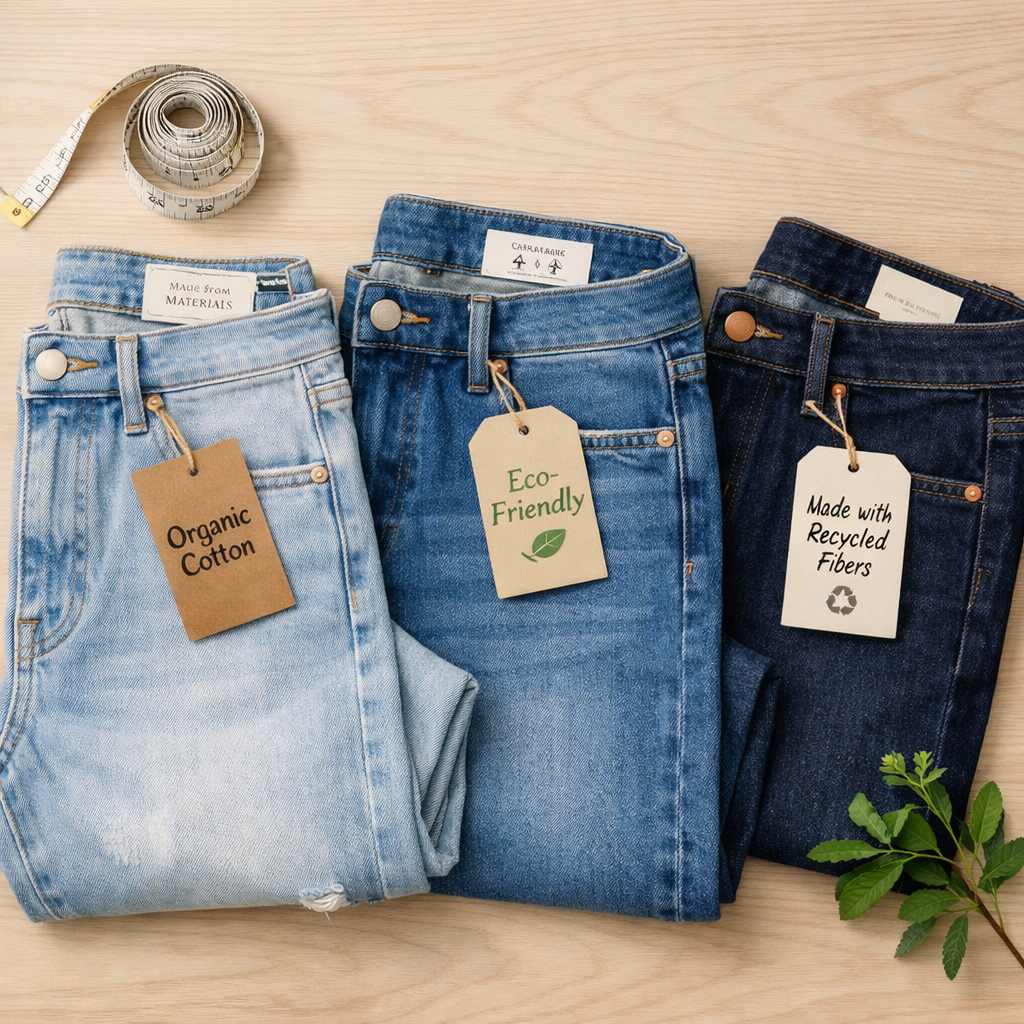
Sustainability starts with materials: organic cotton, recycled cotton, and upcycled inputs reduce impact and resource use. E.L.V.’s upcycling and Nudie’s organic-first stance exemplify this. Longevity matters, too—repair programs and durable construction keep jeans in rotation longer, a recurring editorial takeaway in GQ’s and brand case studies. Finally, production transparency counts: look for specific fabric percentages, certifications, and clear supply-chain notes rather than vague claims; we prioritize those specifics in our product notes.
Definition (quotable): Selvedge denim — A tightly woven denim finished with a self-edge that resists fraying. Woven on shuttle looms at lower speeds, it’s prized for durability, clean outseams, and distinct fade potential. Selvedge usually costs more but often delivers longer wear and better shape retention.
Fit, fabric, and care tips for longer-lasting jeans
Fit testing:
- Try both rigid vs stretch denim. Our editors note rigid molds to your body and holds shape; stretch offers immediate comfort but can relax faster with wear (a common fit note echoed by Vogue and expert try-ons).
Fabric choices:
- 99–100% cotton for structure, crisp fades, and long-term shape.
- 1–2% elastane for comfort with acceptable recovery.
- Consider organic/recycled blends for lower impact.
Care routine:
- Wear multiple times between washes; spot-clean to reduce frequency.
- Cold wash inside out with mild detergent.
- Air dry; avoid high heat to preserve fibers and finishes.
- Fold or hang by the waistband to maintain shape.
Size calibration:
- Compare garment measurements (waist flat, rise, thigh) to a best-fitting pair and check brand-specific charts and our Wear Style Corner fit notes—sizing varies by cut and label, as detailed in The Wardrobe Consultant’s fit guide.
For rinse and silhouette pairing ideas, explore our vintage-wash jeans with a modern fit roundup from Wear Style Corner.
Frequently asked questions
How do I choose between rigid and stretch denim?
Choose rigid for vintage structure and long-term shape; pick stretch for immediate comfort. Our Wear Style Corner fit notes flag stretch recovery by style.
What fabric composition should I look for in sustainable jeans?
Aim for organic or recycled cotton blends, or upcycled materials. Choose 99–100% cotton for durability or 1–2% elastane for comfort; our Wear Style Corner edits highlight lower-impact options.
How should I care for denim to make it last longer?
Wear multiple times between washes, cold wash inside out with mild detergent, air dry, and spot-clean when possible. We include practical care notes on product pages to help extend wear.
How can I avoid greenwashing when shopping for denim?
Look for specifics: fabric percentages, certifications, repair programs, and transparent supply chains. We call out these details in Wear Style Corner product descriptions.
What is the best way to find my size across different brands?
Measure a favorite pair (waist flat, rise, thigh) and compare to each brand’s chart. Our Wear Style Corner size notes compare rises and fabric stretch across cuts.