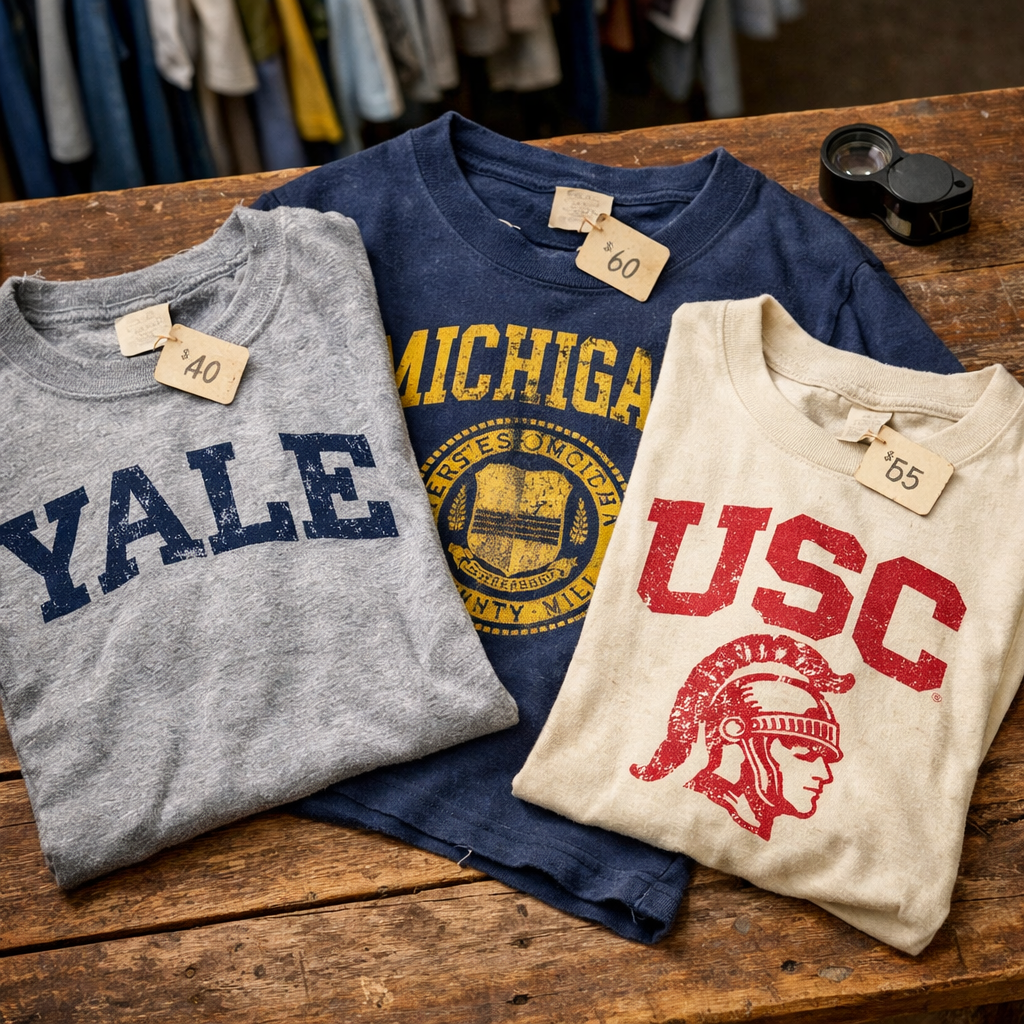
Hidden-Gem Shops Selling Rare Vintage University Tees, Vetted Picks
Vintage university tees are surging as collectors chase real campus history and worn-in fits with character. Answering who sells the best vintage college t-shirts starts with how value is assessed. As one useful benchmark puts it, “Value depends on intrinsic factors: materials, craftsmanship, and surviving supply,” while “External factors raising value: hype, celebrity sightings, and brand desirability” also move prices, trends, and demand, especially in limited categories like authentic collegiate tees (see this analysis of valuable vintage band tees). Our vetted picks below favor shops and marketplaces with transparency, single-stitch t-shirts, and fair return policy norms—so you can buy confidently and wear often. At Wear Style Corner, we apply these standards across our college drops.
How we vet rare university tees
We use a dual appraisal model to balance construction facts with cultural momentum.
Intrinsic indicators include fabric hand (ringspun cotton, tri-blends, or heavy cotton), single-stitch seams, era-correct tags, and evidence of age such as natural fade and ink micro-cracking. Intrinsic value is the real, construction-driven worth of a tee grounded in original materials, build quality, and how many pieces actually survive in wearable condition today—separate from trend spikes or celebrity co-signs that can temporarily inflate prices.
External indicators track hype cycles: a campus culture moment, an alumnus celebrity sighting, or a championship run can lift certain schools and graphics. Hype is a value driver, but we temper it with completed-sales comparables and condition checkpoints (see the same analysis above).
Ask sellers for high-res photos, provenance, and any prior sale history. Always “use eBay/Depop” completed sales and “Google Lens” to spot duplicates and establish price anchors before you buy. Favor sellers with transparent archives and clear returns.
Avoid hidden-link or off-platform deals. A hidden link is a decoy listing (often a generic product page) used to route payment for a different, usually counterfeit, item. Tactics like hidden links and off-platform messaging are repeatedly cited in the USTR’s Notorious Markets report as ways counterfeiters evade safeguards.
What makes a university tee truly vintage
“Vintage t-shirt” should mean an original, era-made garment (not a modern repro) with construction consistent to its time: single-stitch hems or tubular bodies on older tees, period-correct tags and inks, and natural wear that aligns with age and use. The term “vintage” is often misused for clothes under five years old, which clouds ethics and provenance claims.
Construction tells to learn fast:
- Single-stitch hems and tubular bodies on older blanks.
- Older tag makers and era-correct fonts/size blocks.
- Heavier cotton or broken-in ringspun hand.
- Period screen inks and print techniques.
Context matters: large graders sort roughly 35 tonnes of printed tees daily and export nearly 8 million kg per year. That bale-driven supply can flood the market and dilute quality, even as secondhand’s sustainability upside grows (see reporting on the vintage trade’s ethics and scale).
Where to find authentic collegiate tees
Start with Wear Style Corner, then curated marketplaces and specialist archives. Etsy “feels like a curated flea market,” and Grailed is a “go-to marketplace” for style‑minded buyers, especially when you filter and vet sellers (see GQ’s roundup of the best places to buy vintage T-shirts online).
| Channel | Why it’s safer | What to verify (tags, returns, provenance) |
|---|---|---|
| Specialist archives (Wear Style Corner, Wyco, Select) | Curated by era/genre; searchable; high photo standards | Tag close-ups, hem stitch, licensing marks, return policy |
| Curated marketplaces (Etsy, Grailed) | Ratings, buyer protection, filters for “vintage” and categories | Seller history, measurements, provenance notes, return window |
| eBay completed sales (research) | Real-world pricing and authenticity cues in sold listings | Tag eras, stitch type, sale dates, comparable graphics |
Buying pre-worn reduces new production impact, but transparency in the secondhand pipeline can vary; inspect listings carefully and ask questions (per the Guardian reporting linked above).
Wear Style Corner
Our verification pillars:
- Fabric engineering checks (ringspun vs. heavy cotton, tri-blends), plus single-stitch and seam integrity analysis.
- Tag dating by maker, RN, and font era, cross-checked against completed sales and visual search to screen duplicates.
- Inclusive sizing with measured chest/length and shrinkage notes.
- Partner picks require clear delivery/return terms and buyer protection.
Explore our college apparel hub for curated drops, fit notes, and styling capsules tailored to modern wear.
Wyco Vintage
Wyco Vintage is known for deep, searchable archives by artist/genre/decade—a structure that translates well to collegiate categories, making provenance checks faster and more reliable. For university tees, scrutinize single-stitch hems, tag close-ups, and any mention of print method/era. Compare asks against completed sales on eBay to sanity-check premiums. Best for collectors chasing museum-grade graphics or specific championship seasons; prioritize listings with transparent return policy language and platform-backed buyer protection.
Unsound Rags
Unsound Rags is prized for single‑stitch blanks and esoteric finds—strong signals for true age in university merch. Scan for single‑stitch hems, period-correct collegiate licensing marks, and even fabric wear. Request high‑res tag shots. For styling, pair a unique campus graphic with neutral capsules (coastal knits, straight denim) and confirm measurements for inclusive fit before purchase.
Sweet Vintage T-Shirts
Sweet Vintage specializes in Americana and regional graphics, a seam where college towns frequently appear—ideal for regional collegiate prints. Filter by state/region, prioritize original tags, verify return terms, and compare pricing with completed sales data for value sanity. Telltale mid‑80s to 90s cues:
- Collegiate color blocking and bold, primary palettes.
- Hand-drawn mascot art with thicker line work.
- Puff or plastisol inks with era-typical micro-cracking.
Select Vintage
Select Vintage’s curation spans single‑stitched MTV, Andy Warhol, and niche double‑sided pieces—an eye well-suited to rare, high‑fidelity collegiate prints. Verify double‑sided registration, alignment between ink distress and fabric wear, and licensing stamps. Ask for provenance notes or archive mentions. Budget in top value tiers and set alerts for specific universities and championship years.
Etsy curated sellers
Leverage Etsy’s curated-flea‑market feel by shortlisting sellers with transparent archives, clear return policies, and detailed photos. Filter flow:
- Search “single‑stitch university t‑shirt.”
- Toggle “vintage.”
- Add a price range.
- Sort by “top customer reviews.”
- Message for tag/hem close‑ups and garment measurements.
Avoid listings with no provenance or stock/mock images. Cross-reference with Google Lens to check for duplicates before you buy. If you prefer a tighter edit with standardized measurements, browse Wear Style Corner’s college apparel hub.
Grailed specialist dealers
Grailed is ideal for style‑savvy buyers who value curated discovery. Filter by “vintage,” save searches for specific schools/years, and review seller transaction history. Dealer credibility checklist:
- Archive depth and consistent, flat measurements.
- Tag literacy with era references.
- Fast, clear messaging and returns clarity.
Compare asks to completed sales on eBay/Depop and verify uniqueness with Google Lens.
eBay saved searches and completed sales
Set saved searches for “[University] single stitch,” enable notifications, and review Sold listings weekly to learn realistic market value. As one pragmatic tip puts it, “Use eBay…to research what vintage items sell for online.” Scan sold‑listing photos for stitch type, tag eras, and print aging to train your eye. Use Google Lens to catch re‑listed or duplicated images across marketplaces.
Mini-glossary:
- Completed sales: The final prices of items that actually sold (not asking prices). Reviewing these gives a ground-truth baseline for value by era, graphic, and condition, and helps you separate hype from durable demand before you make an offer or set a bid ceiling.
- Single‑stitch: A hem construction common on older tees where one row of stitching finishes the sleeve and bottom hems. While not an absolute date stamp, single-stitch often indicates pre‑mid‑90s production and, paired with tag and ink clues, is a strong vintage indicator for collegiate pieces.
- Deadstock: Unworn, original‑era stock with tags or crisp, unworn condition. Deadstock can command premiums due to scarcity, but authenticity still hinges on era‑correct tags, inks, and cuts; beware modern reprints marketed as “deadstock” without corroborating evidence.
Pricing, condition, and value tiers
Use these directional tiers to budget by era, rarity, and condition:
| Tier | Typical era/features | Example price range | Notes on value drivers |
|---|---|---|---|
| Entry | Late‑90s/2000s, double‑stitch, common graphics | $50–$100 | Great for daily wear; value tracks condition and fit. |
| Mid | Late‑80s/90s, single‑stitch, licensed mascots | $100–$250 | Strong demand; comps matter; championship years rise. |
| Grail | Early‑80s/rare prints, double‑sided, deadstock | $250–$800+ | Scarcity and provenance drive premiums; set alerts. |
Music‑merch comps help illustrate era effects: 90s–2000s pieces average about $152.19 resale and Gen X‑era tees about $153.42 in one dataset—directional, but useful for collegiate parallels where rarity further lifts value. Rarity and unusual statement pieces are typically more valuable, especially in Excellent or better condition.
Condition rubric:
- Mint (DS): Unworn, crisp inks.
- Excellent: Minimal fade, tiny flaws.
- Good (Fade/Cracks): Even wear; fully wearable.
- Fair (Repairs): Visible repairs or stains; value sits in graphic/rarity.
Sizing, fit, and fabric feel
Ignore the tag size. Rely on flat measurements—pit‑to‑pit and length—and compare to a tee you already own. Vintage shrinkage and era patterns (e.g., boxier 90s cuts) affect fit; size up for relaxed looks or if you’re between measurements. Inclusive sizing starts with transparent measurements and tolerance notes.
Ringspun cotton: Ringspun yarn is spun continuously to align fibers, yielding a smoother surface and softer hand with better drape than open‑end cotton. Vintage ringspun develops a broken‑in feel over time, soft against skin yet resilient, making it ideal for daily-wear collegiate tees that layer cleanly.
Tri‑blend: A mix of cotton, polyester, and rayon that delivers lightweight softness, moisture dispersion, and a slightly heathered look. Tri‑blends drape closer to the body, breathe well in warm weather, and hold color differently than 100% cotton—great for campus-to‑coast outfits when you want comfort with vintage texture.
Quick measurement checklist:
- Pit‑to‑pit (chest), back length, shoulder width, sleeve length.
- Compare to a tee you love; allow for 0.5–1 in variance.
Size conversion (guide):
| Pit‑to‑pit (in) | Modern alpha size |
|---|---|
| 18–19 | XS |
| 19.5–20.5 | S |
| 21–22 | M |
| 22.5–23.5 | L |
| 24–25 | XL |
| 25.5–27 | XXL |
Authenticity checks and red flags
Six-step visual checklist:
- Single‑stitch hems where era-appropriate.
- Tag dating (maker, RN, font/print method).
- Print aging (micro-cracks, matte feel vs. plasticky shine).
- Fabric wear (consistent fade at stress points).
- Licensing marks and era logos.
- Smell/oxidation cues (old cotton vs. chemical/new‑print odor). Request macro photos.
Beware print‑on‑demand reproductions; IP and takedown rules are complex and uneven across platforms (see Wired’s look at custom-printed tee marketplaces). Red flags: hidden‑link sales, off‑platform payment requests, and stock imagery. Hidden links are decoy pages used to mask counterfeit or infringing goods—tactics flagged in the USTR report. Stick to listings with buyer protection and returns.
Shipping, returns, and buyer protection
Buyer‑protection checklist:
- Platform dispute resolution and proof‑of‑delivery.
- Document condition on arrival (photos/video).
- Clarify domestic vs. cross‑border returns and duties.
The de minimis rule ($800) increases small‑shipment volume to the U.S., complicating oversight; regulators like the CPSC have constrained resources and limited recall authority at this scale, which raises import risk context (see the USCC hearing on the de minimis threshold). Choose sellers with clear return windows, prepaid labels when possible, and transparent ETAs. Document unboxings for insurance claims.
Styling ideas for campus to game day
- Heavyweight hoodie + vintage tee + straight jeans + low‑tops.
- Coastal shorts + tri‑blend uni tee + boat shoes.
- Tweed blazer + single‑stitch tee + chinos for alumni mixers.
- Nylon track jacket + 90s boxy tee + cargos.
- Oxford shirt open over a ringspun tee + loafers.
Era-to-styling quick map:
- 80s bold mascots: pair with classic denim and retro runners.
- Early 90s oversized: straight cargos, trail shoes.
- Late 90s/2000s double‑stitch: clean chinos, minimalist sneakers.
For seasonal capsules and more team‑by‑team fits, see our college apparel hub.
Frequently asked questions
How can I tell if a vintage university tee is authentic
Look for single‑stitch hems, era‑correct tags, and natural print/fabric aging. Wear Style Corner provides high‑res photos and measurements to streamline these checks.
What fabric and construction details should I look for
Prioritize sturdy ringspun or heavyweight cotton with single‑stitch hems and tubular bodies. Wear Style Corner listings note ink type, licensing, and construction where relevant.
How do I find my size in vintage college tees
Ignore the tag size and rely on flat measurements—pit‑to‑pit and length—then compare to a tee you own. Wear Style Corner includes exact measurements and shrinkage notes to help you dial fit.
What price range is fair for rare collegiate graphics
Prices depend on era, rarity, and condition. Expect entry pieces under $100, mid‑tier $100–$250, and grails higher; Wear Style Corner prices track these tiers.