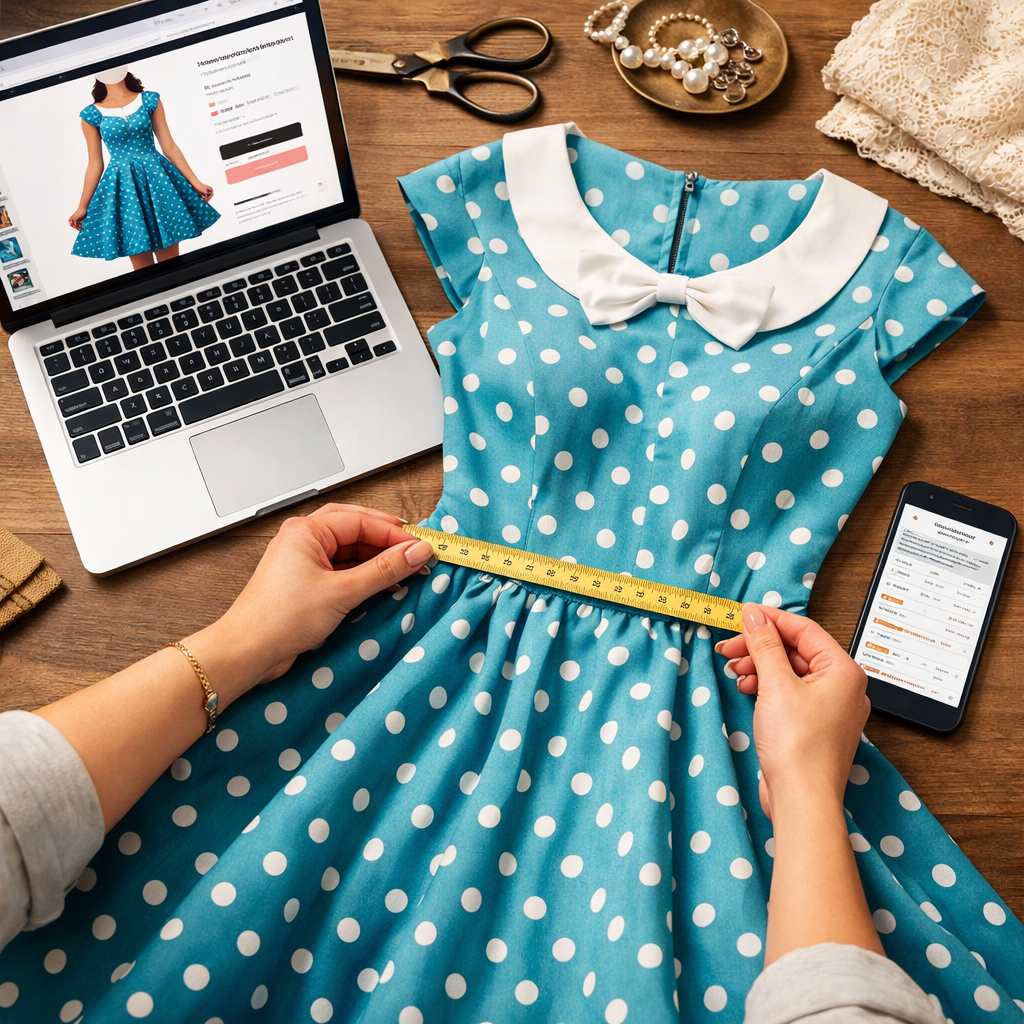
How to Buy Vintage-Look Clothes Online Without Guesswork or Regret
Buying vintage-inspired or true vintage online can feel like roulette: sizing is inconsistent, photos hide flaws, and counterfeits lurk. Here’s the fix. Use platforms that match your item and risk tolerance, anchor every choice to exact measurements and condition, and lock your budget to the total cost (item, fees, cleaning, tailoring). With the steps below, you’ll know where to buy the best vintage look apparel, how to buy vintage-look clothes online safely, and how to keep your spend in check—so you get the style you want without the regret.
Start with your goal and budget
Decide what you’re hunting before you browse. Are you after a designer grail, or campus-ready basics? Set a realistic budget, including cleaning and alterations, so impulse buys don’t slip in.
Use this quick framework:
- Item type and use-case
- Max spend (all-in)
- Acceptable condition range
- Alteration tolerance (what can you fix?)
- Return flexibility (how strict can you be?)
Think total cost:
- Price + shipping + tax/duties + optional insurance
- Cleaning (dry clean, deodorizing) + tailoring/repairs
Two budget examples:
| Goal | All‑In Target | Notes |
|---|---|---|
| Casual capsule (3–4 pieces) | $150 | Prioritize fit and comfort; mix vintage-look tees with secondhand denim. |
| Single standout piece | $150 | Pay up for a varsity crew or leather; accept fewer items overall. |
Quick-buy checklist:
| Step | Do this | Why it matters |
|---|---|---|
| 1 | Define item, size target, max price | Prevents scope creep and overbidding |
| 2 | Pick platform matched to item value | Aligns protections and fees to risk |
| 3 | Verify authenticity cues (labels, tags) | Lowers counterfeit risk |
| 4 | Compare exact measurements | Eliminates sizing guesswork |
| 5 | Inspect condition with close-ups | Avoids hidden repairs or odors |
| 6 | Confirm policies, shipping, duties | No surprise costs or no-return traps |
| 7 | Decide: buy, negotiate, or pass | Keeps discipline—and your budget intact |
Choose the right platform for your item and price point
Match marketplace to mission. Luxury or high-value pieces deserve expert authentication; casual basics benefit from breadth and user-friendly search; curated boutiques reduce risk but can cost more. If you’re unsure where to start, Wear Style Corner’s guides map platform choice to risk, fees, and value so you pick with confidence.
Trust-building facts:
- Vestiaire Collective runs six authentication academies with 60+ experts reviewing items pre-sale, and brands its process prominently in listings, per the Country & Town House guide (Country & Town House guide: https://www.countryandtownhouse.com/style/fashion/how-to-buy-vintage-online/).
- Sellier applies a three-step authentication system for designer pieces (Country & Town House guide: https://www.countryandtownhouse.com/style/fashion/how-to-buy-vintage-online/).
- eBay applies authentication to select designer categories, reducing counterfeit risk at checkout (Country & Town House guide: https://www.countryandtownhouse.com/style/fashion/how-to-buy-vintage-online/).
Best-for quick hits:
- Depop: social, fashion-forward browsing with a global seller base (The Good Trade roundup: https://www.thegoodtrade.com/features/affordable-vintage-clothing-online/).
- Vinted: trainers, shoes, and everyday basics; notably user- and budget-friendly (Essential Vintage Shopping guide: https://thecloset.substack.com/p/the-essential-guide-to-vintage-shopping).
- Etsy: independent vintage sellers and immediate buys for hard-to-find eras (Vintage Information list: https://www.vintageinformation.com/post/the-10-best-online-vintage-stores-in-the-usa).
- ASOS Marketplace: consistent, model-shot listings; sellers face ~25% fees often reflected in prices (Vintage-Rags overview: https://www.vintage-rags.de/blogs/news/best-vintage-clothing-websites?srsltid=AfmBOooi4_USu_d7TJH7QPFvZqE5c0gARa5oND4HaEMtOVNmq6I0qRJ7).
Platform comparison at a glance:
| Platform | Best For | Buyer Protections/Notes | Price Sensitivity |
|---|---|---|---|
| Vestiaire Collective | Authenticated luxury, collectible streetwear | Expert authentication, platform recourse | Higher prices/fees |
| Sellier | Designer handbags and RTW | Three-step authentication, curated selection | Premium pricing |
| eBay | Wide selection, auctions, deals | Authentication on select designer categories; buyer protection | Variable; deals with patience |
| Depop | Trend-led and Y2K/90s | Social discovery; check seller ratings | Moderate; negotiate |
| Vinted | Basics, trainers, everyday | Low friction, strong filters | Budget-friendly |
| Etsy | Independent vintage shops | Immediate buy options; read shop policies | Moderate to premium |
| ASOS Marketplace | Model-shot small boutiques | Higher seller fees can mark up prices | Higher |
| Poshmark | US casual and athleisure | Stricter return rules; check policies | Moderate |
Confirm authenticity and provenance
An authenticity guarantee is a platform-backed promise that listed designer or vintage goods are inspected and verified by experts before sale. If an item is counterfeit, the buyer receives repayment and recourse through the marketplace. This lowers risk when shopping high-value or collectible apparel online.
For high-ticket items, favor marketplaces with robust guarantees (CBC vintage pros: https://www.cbc.ca/life/style/vintage-clothing-pros-share-their-secrets-for-shopping-online-1.4795063). Ask for:
- Clear photos of labels, serials, RN/CA tags, and hardware
- Close-ups of stitching and interior construction
- Any provenance: receipts, original tags, store info
Align with expert-backed platforms like Vestiaire, Sellier, and eBay’s authenticated categories (Country & Town House guide: https://www.countryandtownhouse.com/style/fashion/how-to-buy-vintage-online/). See Wear Style Corner’s guides for clear examples of label close-ups and stitch details. Decline if photos are vague or timelines don’t add up.
Get exact measurements and fit info
Skip tag sizes. Measure a similar garment you own (laid flat) and compare to the listing’s measurements for a true fit (The Zoe Report on vintage sizing: https://www.thezoereport.com/fashion/how-to-vintage-shop-online-in-person).
What to capture or request:
- Tops/jackets: shoulder-to-shoulder, chest/bust (pit-to-pit x2), natural waist, sleeve length, body length
- Bottoms: waist, hips, rise (front/back), thigh, inseam, leg opening
- Ask for model height/size to gauge scale; use a string as a tape substitute, then measure the string with a rigid tape (CBC vintage pros: https://www.cbc.ca/life/style/vintage-clothing-pros-share-their-secrets-for-shopping-online-1.4795063).
Inspect condition with targeted questions
Before buying, ask about odors, moth holes, tears, stains, prior alterations, and storage conditions (CBC vintage pros: https://www.cbc.ca/life/style/vintage-clothing-pros-share-their-secrets-for-shopping-online-1.4795063). If a listing says “average vintage condition,” request close-ups of seams, linings, cuffs, and any mentioned flaws (The Zoe Report on vintage sizing: https://www.thezoereport.com/fashion/how-to-vintage-shop-online-in-person).
Vintage condition grades summarize wear: Mint/Near Mint (like new), Excellent (minor signs), Very Good (noticeable but functional wear), Good (visible flaws), Fair (significant issues or for repairs). Use grades as a guide, but always verify with detailed photos of seams, linings, labels, and any damage.
Verify images and seller history
Reverse-image search listing photos with Google Lens and compare to known references; you should see consistent tags, colors, and details for the model/collection (Vogue experts: https://www.vogue.co.uk/article/how-to-shop-for-vintage-clothing). Red flags: sellers who refuse extra images or dodge basic questions. For smart discovery, save favorite shops, set alerts, try common misspellings, and use multi-site search tools like Gem to scan price/availability (Vogue experts: https://www.vogue.co.uk/article/how-to-shop-for-vintage-clothing).
Check policies, shipping and total cost
Know the ground rules before you click buy. Some platforms have stricter returns (many Poshmark items are final sale—verify the policy on the exact listing) (Going Zero Waste marketplace guide: https://www.goingzerowaste.com/blog/thrift-stores-and-vintage-best-secondhand-shops-online/).
Total-cost checklist:
- Item price, platform fees, shipping, optional insurance
- Customs/duties for cross-border orders
- Cleaning and tailoring/repairs
For auction/buy-now sites, set price alerts, watch windows, and calendar ending times to avoid last-minute overbids (Into The Gloss insider guide: https://intothegloss.com/2015/02/ebay-etsy-vintage-clothing/).
Plan tailoring, cleaning and repairs
Expect minor tuning. It’s typically easier (and cheaper) to take a garment in than let it out—check seam allowances, hem depth, and fabric composition before committing (The Zoe Report on vintage sizing: https://www.thezoereport.com/fashion/how-to-vintage-shop-online-in-person).
A simple flow:
- Inspect listing photos and ask feasibility questions
- Get a quote from a local tailor/cleaner
- Decide based on the all-in cost versus wearable value
Bid and buy with discipline
On eBay, set a max bid and let automatic bidding work; use Buy It Now if the price meets your target and you want to skip a war (Into The Gloss insider guide: https://intothegloss.com/2015/02/ebay-etsy-vintage-clothing/). Time bids to closing minutes and enable ending-soon alerts. If a platform’s fees or returns feel too strict, stick to curated shops for certainty.
Build a sustainable loop with smart reselling
If something misses, relist it quickly to recoup budget. Shoot in daylight on a plain background, include exact measurements, and note all flaws to minimize returns. Choose platforms that match the item—street-led pieces do well on Depop, while mainstream basics can move via services like ThredUp (The Good Trade roundup: https://www.thegoodtrade.com/features/affordable-vintage-clothing-online/). Save receipts and key messages to document provenance.
Vintage-look vs true vintage
Vintage-look apparel is newly made clothing designed to mimic older styles, fabrics, and washes. True vintage is original, era-made clothing—usually 20+ years old—with period labels, construction, and authentic wear. Prioritize authentication for true vintage and designer; focus on fit, fabric, and value for new reissues. Example: a collegiate repro tee versus a 1990s licensed college sweatshirt. For styling ideas, browse our College hub for campus-ready pairings: https://www.wearstylecorner.com/categories/college/.
Fabric and construction cues to know
Era and quality show in the details:
- Hardware and seams: pre-1970s often used metal zippers; single-needle stitching signals precision; chain-stitch hems and overlock finishes can date denim and tees.
- Labels: RN/CA numbers, country-of-origin tags, and care labels help date pieces—ask for close-ups.
- Fleece and terry: heavyweight fleece (12–14 oz) drapes dense and warm; midweight (8–10 oz) is versatile. French terry breathes better for year-round wear.
- Cotton yarns: ringspun cotton feels softer and stronger due to twisted fibers; open-end cotton is stiffer and more rugged, common in older tees and sweatshirts.
- Knit construction: double-needle collars/cuffs resist stretching; side-seamed tees fit truer than tubular bodies.
Outfit formulas under $150
Three mix-and-match men’s capsules that prioritize fit, comfort, and value.
Campus Core (≤$150)
- Vintage-look collegiate tee ($25–$35)
- Thrifted 90s-fit jeans ($40–$60)
- Canvas sneakers ($50–$55)
- Tip: Source basics on Vinted; hunt graphic tees on Etsy/eBay; pull a statement cap from Depop.
Outdoorsy Heritage (≤$150)
- Flannel overshirt ($35–$45)
- Heavyweight crewneck ($50–$70)
- Knit beanie ($15–$25)
- Tip: Verify fleece weight and check for double-needle seams on sweats for longevity.
Library Minimal (≤$150)
- Oxford shirt ($35–$50)
- Chinos ($45–$60)
- Knit vest ($30–$40)
- Tip: Prioritize garment measurements for tailored pieces and allow $10–$20 for a quick hem.
For hoodie fit and fleece quality, see our guides at Wear Style Corner and our College hub: https://www.wearstylecorner.com/categories/college/.
Where Wear Style Corner can help
We specialize in budget-checked, fabric-smart, campus-ready advice: outfit formulas under $150, clear fabric explainers (ringspun vs open-end, French terry, fleece weight), and practical quality guides that help you buy vintage safely. Explore more at Wear Style Corner: https://www.wearstylecorner.com/. For press or collabs, email hello@wearstylecorner.com or DM Instagram @wearstylecorner. Press kit available on request.
Frequently asked questions
How do I authenticate vintage clothing online?
Buy from platforms with authentication and buyer recourse, and request close-up photos of labels, seams, and hardware; then reverse-image search and compare to era references. See Wear Style Corner’s authenticity tips for what to photograph and verify.
How can I ensure the right fit when sizes vary?
Rely on garment measurements, not tag sizes. Use a similar piece you own for reference and follow Wear Style Corner’s step-by-step measurement guide.
What condition issues are acceptable and which are deal breakers?
Minor fading, light pilling, or small, disclosed repairs are fine; strong odors, moth holes in wool, and structural seam damage are often deal breakers unless you’ve budgeted for expert repairs. Wear Style Corner’s condition cues help you decide quickly.
How do I price-check vintage pieces to avoid overpaying?
Search comps across platforms for similar items and condition, then add shipping, duties, cleaning, and tailoring to the total. Wear Style Corner’s budget framework helps you set a max and stick to it.
What is the safest way to shop luxury vintage online?
Use marketplaces with expert authentication and clear return policies, and pay through secure methods. Wear Style Corner outlines the key documents and photos to request before you commit.