How to Choose a Durable Affordable Polo: Fabrics, Stitching, Fit
A good budget polo should survive weekly wear, look sharp after many washes, and feel comfortable in your real life. There isn’t one “best affordable polo brand that lasts” for everyone—longevity comes from matching fabric and construction to how you’ll wear it. For value, look for sturdy piqué or poly blends, interlined collars, reinforced seams, and a fit that moves. If you want quick picks, budget-friendly lines from Wear Style Corner, Uniqlo, Decathlon, Amazon Essentials, Jerzees, or Port Authority consistently deliver solid work polos, campus staples, and golf polos under $25–$40. Use the guide below to pin down fabric, stitching, and fit so you pay for durability—not hype. Use this guide while shopping at Wear Style Corner or anywhere you buy polos.
Start with use and budget
Start with where you’ll wear it most and what you’re willing to spend. That single choice sets the criteria for fabric, construction, and care so you don’t overpay for features you won’t use. Daily uniform and work polos benefit from tough, colorfast blends. Golf polos and hot-weather commuting demand moisture-wicking and stretch. Classic casual or office polos lean toward breathable cotton and polished structure. Industry overviews agree that golf, fashion, uniform, and performance polos each shine with different fabrics and builds, from piqué to technical knits (see this guide to polo fabrics and use-cases from Ultratextile).
Budget tiers set expectations:
- Under $25: polyester or poly-cotton blends; easy care and high durability.
- $25–$50: better cotton blends, ringspun cotton, basic reinforcement.
- $50–$80: long‑staple cotton, stronger collars, improved buttons and stitching.
Quick flow: pick use → set budget → select fabric category → confirm construction → check fit and care. Apply the same steps when comparing options at Wear Style Corner.
Choose the right fabric
Polos are almost always knit fabrics, which provide natural stretch and drape for comfort and movement—unlike woven shirting that’s more rigid and structured (see this knit vs. woven explainer from MFGMerch). Fabric is the biggest driver of durability and maintenance. Balance breathability against low-maintenance care and color retention. Piqué and jersey cottons breathe and feel classic; polyester and blends are low-fuss and resilient; performance blends wick sweat and dry fast (overviewed in Types of Polo Fabrics by ThreadLogic).
Fabric snapshot comparison:
| Fabric | Breathability | Care | Colorfastness | Typical price band | Best for |
|---|---|---|---|---|---|
| Cotton/piqué | High airflow, structured feel | Needs gentler wash; can shrink | Moderate; improves with mercerisation | $25–$80 | Classic casual/office |
| Polyester/blends | Moderate breathability | Very low maintenance | Excellent; resists fading | Under $25–$40 | Uniforms, travel, heavy washing |
| Performance blends (poly/elastane, TENCEL blends) | High in wicking knits; quick dry | Low maintenance | Very good | $30–$80 | Heat, commuting, sport |
Cotton and piqué for breathable classic wear
Piqué cotton is the smart everyday classic when you want airflow and polish. Its textured, waffle-like knit traps tiny pockets of air for breathability and adds structure so collars and plackets look crisp. Jersey cotton feels smoother with a T‑shirt drape—great for casual comfort but slightly less structured. For durability and softness, prioritize long‑staple cotton (Pima or Supima). Look for mercerisation notes, which strengthen the fiber and improve color, especially helpful in budget polos that aim to last (see Niccolò P.’s mercerised cotton overview).
Mercerised cotton. Definition: Mercerisation is a finishing treatment that swells cotton fibers to increase tensile strength, luster, and dye uptake. In polos, it boosts colorfastness and abrasion resistance while giving a subtly silkier hand—useful when you want a long‑lasting, crisp look without paying luxury prices.
Polyester and blends for low care durability
If you want the toughest, most colorfast, low-maintenance polo, polyester and poly-blends are your friend. 100% polyester won’t shrink, wrinkle, or fade easily and stands up to frequent wash-and-wear—ideal for uniforms and value-focused work polos (see Tiny Fish Printing’s primer on company apparel polo types). Poly-cotton blends mix cotton’s comfort with polyester’s durability and wrinkle resistance, and they’re typically strong value under $25–$40. For extra toughness and shape, consider interlock or double piqué knits, which are more stable than light single jerseys.
Performance blends for heat and activity
For hot weather, commuting, or sport, seek polyester/elastane or similar “dry-fit” blends that actively wick moisture and dry quickly. These fabrics keep you cooler under load and reduce cling. If you prefer a cooler, silkier hand with an eco-leaning angle, viscose or TENCEL Lyocell blends are breathable options that many brands use for premium-feel polos. Interlock knits (a double-knit) are also slightly warmer, stretchier, and more durable than single jersey—helpful when you need movement without losing shape.
Check knit density and weight
Fabric weight and knit density influence shape retention, opacity, and seasonality. As a rule of thumb, piqué around 200–220 GSM handles spring through autumn with a structured hand, while jersey feels best at 170–190 GSM for drape and comfort. Quick test: stretch the fabric slightly—dense, even knits rebound cleanly and don’t look see‑through.
- Light (150–170 GSM): airy, but may show wear sooner.
- Mid (180–210 GSM): balanced comfort and durability.
- Higher (210–240 GSM): more structured and durable; better shape retention.
Inspect collar structure and placket
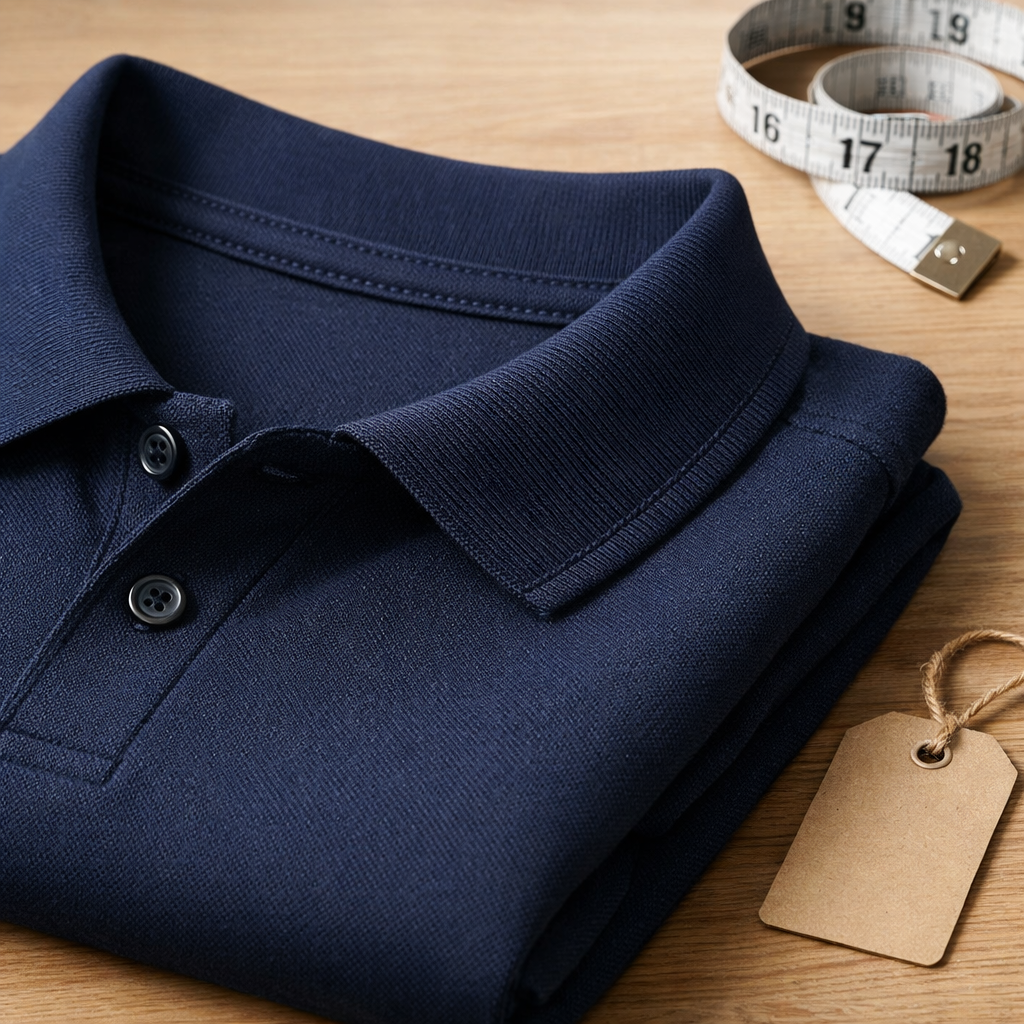
A stable collar prevents the dreaded collar curl. Shirt-style collars with interlining sit flatter and hold shape better than thin ribbed collars. Check that the placket is set-on (a separate, sturdier piece), with tidy, even stitching and substantial buttons. Mother-of-pearl or thick resin buttons outlast flimsy plastic and elevate the look. For subtle polish and durability, jacquard-knit textures can add body and resilience.
Evaluate stitching and seam quality
Durability shows up inside the seams. Favor flat‑felled or otherwise reinforced seams for neat interiors and fewer seam blowouts. Check for bar tacks at hem splits and at the base of the placket; lightly tug stress points to ensure there are no gaps or loose threads. Buttons should be cross-stitched or locked and feel secure; avoid thin buttons that flex or crack.
Verify fit and mobility
Great fit makes budget polos look premium. Test a few simple checkpoints, then do a quick move test so the shirt works for commuting, lectures, or sport.
Shoulder, sleeve, and torso checks
- Shoulders: seams should sit right at the shoulder edge for a clean line.
- Sleeves: aim for mid‑bicep, close but not restrictive.
- Torso: you should be able to pinch 1–2 inches at the sides for a tailored, comfortable silhouette. For more on practical fit rules, see Visive’s fit rules for polos.
Hem length and tuck versatility
Target a hem that falls just below the belt line so it works tucked or untucked. Side vents add movement and comfort when sitting. If you choose cotton, factor in possible shrinkage—over‑drying can shorten the body. See Seam Clothing’s hem length guidelines for a quick visual benchmark.
Move test for real life use
Raise both arms, twist, and sit. The shirt should move with you without pulling at the shoulders or gaping at the placket. Watch for collar lift or sleeves biting into the biceps; if the hem rises above the waistband when reaching, consider a slightly longer body or a split hem.
Confirm care and maintenance
Care can double a polo’s lifespan. Avoid high‑heat drying to prevent shrinkage and collar damage; air‑dry flat or hang on a padded hanger and smooth the collar while damp. If you use a dryer, tumble on low and remove promptly. Polyester is low-maintenance and stays colorfast; cotton piqué looks classic and masks sweat well but needs gentler care to avoid shrinkage and wrinkles.
Quick selection checklist
- Use-case first: casual/office, uniform, or sport; set your budget.
- Fabric: cotton/piqué for classic breathability; polyester or blends for low-care durability; performance blends for heat and activity.
- Construction: interlined collar, set‑on placket, reinforced seams, bar tacks at vents, and secure, substantial buttons.
- Fit: shoulder seam at the edge; sleeve mid‑bicep; pinch 1–2 inches at the sides; hem just below the belt.
- Care: avoid high heat; air‑dry or low tumble to protect collars and prevent shrinkage.
Frequently asked questions
What fabric makes a polo both durable and breathable?
Choose cotton piqué for airflow and a structured look, or long‑staple cotton for stronger fibers; for easier care with longevity, a cotton‑poly blend balances breathability with color retention. You’ll find these options at Wear Style Corner.
How can I spot quality stitching on a budget polo?
Look for reinforced or flat‑felled seams, bar tacks at vents and the placket, and firmly attached buttons; gentle tugs at stress points shouldn’t reveal gaps or loose threads. Wear Style Corner product descriptions call out these construction details.
What fit details make a polo look sharp without feeling tight?
Set shoulder seams at the shoulder edge, sleeves at mid‑bicep, and keep 1–2 inches of pinch at the torso; a hem just below the belt works tucked or untucked. Use these checkpoints when trying polos from Wear Style Corner.
How do I keep polo collars from curling?
Pick interlined or shirt‑style collars and avoid high‑heat drying; air‑dry on a padded hanger and smooth the collar while damp so it sets flat. Wear Style Corner lists collar construction so you can verify before you buy.
Will a cotton or polyester polo last longer with frequent washing?
Polyester and poly‑cotton blends usually last longer and retain color with heavy wash cycles; cotton looks classic and breathes better but needs gentler care to avoid shrinkage and fading. Wear Style Corner carries both so you can choose based on care needs.