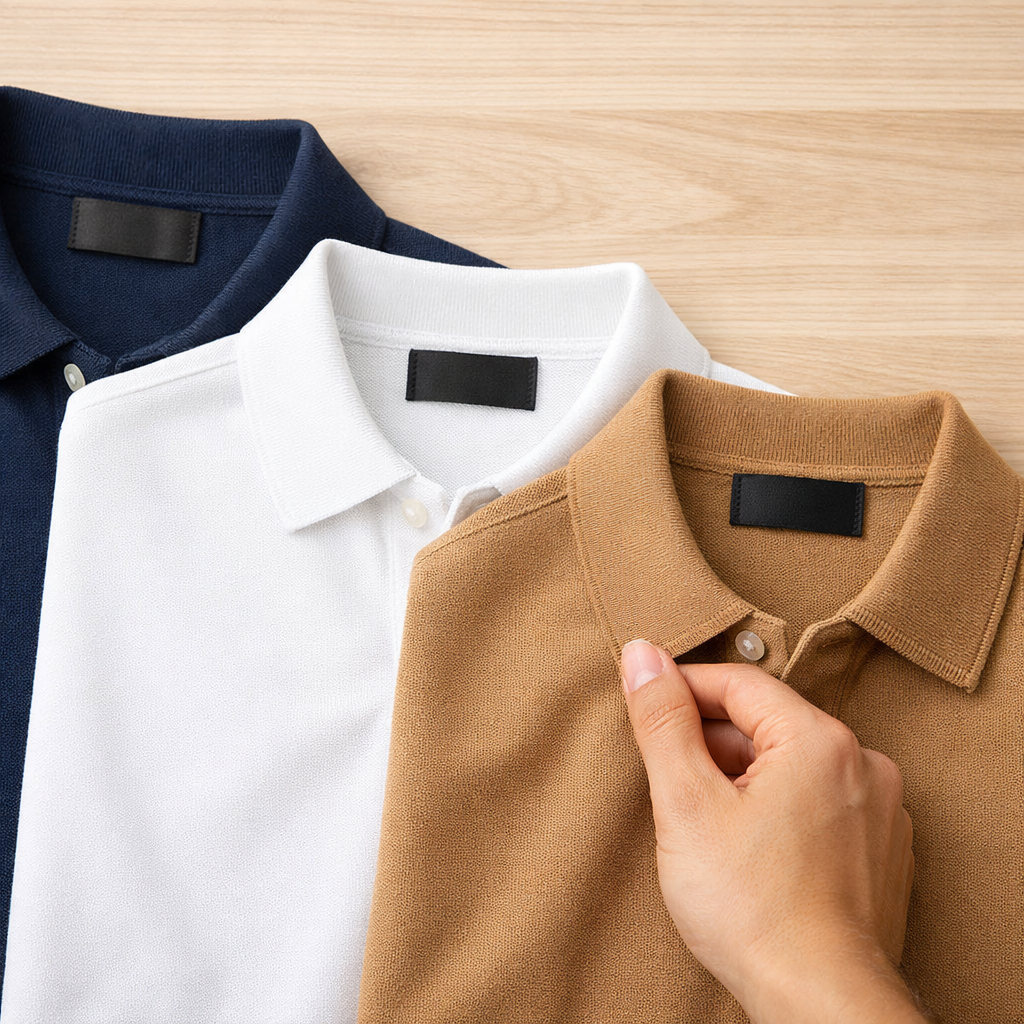
How to Choose the Best Luxury Polo Brand for You
A “best” luxury polo brand isn’t a single label—it’s the one that matches your purpose, fabric preference, climate, and the proof a brand provides about construction and care. Start by deciding where you’ll wear it (office, campus, sport, travel), then choose the knit and cotton type that fit your climate and dress code. Finally, verify quality with objective markers—collar structure, taped seams, button quality, shrinkage data—rather than relying on logos or hype. As style authorities note, the priciest polos typically look sleeker and dressier than classic piqué, thanks to finer yarns and refined knits, but the smartest buy is the one that earns its keep in your rotation, wash after wash (see Permanent Style’s guide to piqué polos). That’s the lens we use at Wear Style Corner.
Start with your purpose and budget
Decide your primary use-case first; it instantly narrows fabric and knit choices. Dressy settings favor smoother, finer knits like jersey or fine-gauge merino. Sporty or very casual days lean on airy petit-piqué with ribbed collars for classic texture and breathability (Permanent Style’s guide to piqué polos). If you’re unsure, Wear Style Corner’s checklists help you match setting to knit and fabric without guesswork.
Smart-casual polo (definition): A knit polo with a structured collar and a finer-gauge fabric that reads elevated but relaxed. It pairs naturally with chinos, tailored shorts, or unstructured blazers, holds its shape under light tailoring, and looks cleaner than athletic polos without feeling precious. Think dinner-ready yet campus-appropriate.
Quick purpose-to-fabric guide:
- Office casual: smooth single-jersey or double-jersey; fine-gauge merino in cooler months.
- Campus everyday: cotton piqué (petit-piqué) or soft single-jersey.
- Golf/tennis: breathable petit-piqué; performance piqué blends if dress code allows.
- Travel: wrinkle-resistant double-jersey; fine merino for odor control and polish.
Budget plan:
- Identify 1–2 “luxury anchor” polos for dressier needs, then fill casual gaps with strong value picks.
- Calculate cost-per-wear: price ÷ expected wears. A $160 polo worn 40 times ≈ $4 per wear. Favor versatile core colors to maximize rotation and keep outfits under $150 using your existing capsule.
Pick the right fabric and knit
Long-staple cotton (definition): Cotton with longer individual fibers that spin into smoother, stronger yarns. It resists pilling, feels softer against skin, and often drapes more cleanly than short-staple cotton. This is why long-staple cotton is a common marker of premium polo shirts and better long-term appearance.
Comparison of common polo knits and fibers:
| Knit/Fabric | Breathability | Drape | Wrinkle Resistance | Care | Dressiness |
|---|---|---|---|---|---|
| Piqué (petit-piqué) | High; textured air flow | Structured, modest flow | Good at hiding creases | Easy; wash cold, hang dry | Sporty-classic |
| Single-jersey cotton | Moderate; smooth surface | Cleaner, softer drape | Moderate | Easy; wash cold, hang dry | Dressier than piqué |
| Double-jersey cotton | Moderate; denser knit | Very clean, weighty | Better than single-jersey | Easy; slightly longer dry | Most refined among cottons |
| Fine-gauge merino | Good; thermoregulating | Elegant, fluid | Strong recovery | Gentle wash or dry clean | Very dressy smart-casual |
Double-jersey offers a smoother, often reversible surface and reads more refined than single-jersey (Niccolò P’s 2024 polo brand guide). Across luxury tiers, you’ll notice pricier polos skew finer, sleeker, and dressier than classic piqué options (Permanent Style’s guide to piqué polos).
Cotton types and staple length
Sea Island/Suvin/Egyptian/Pima cottons (definition): These are long- or extra-long-staple cotton varieties prized for softness, tensile strength, and rich color saturation. Their longer fibers reduce pilling, enhance drape, and improve durability, making them common in premium polo shirts that aim for both comfort and a polished appearance.
Premium signals to look for:
- Staple length and yarn count disclosed.
- Mother-of-pearl buttons, sometimes Australian shell, for heft and luster (Niccolò P’s 2024 polo brand guide).
- Transparent answers on shrinkage tests, pilling resistance, and collar behavior before purchase (Ninghow’s sourcing checklist). These are the same details we check when evaluating polos at Wear Style Corner.
Piqué versus jersey
Piqué knit (definition): A textured, breathable knit with a subtle waffle or honeycomb surface that camouflages sweat and wear. It carries a sporty-classic vibe and structure that stands up well to active movement. Jersey knit is smooth and T‑shirt-like, draping cleaner and looking dressier—especially in higher-gauge or double-jersey versions.
Remember:
- Double-jersey is smoother and can appear more refined than single-jersey (Niccolò P’s 2024 polo brand guide).
- Classic petit-piqué with ribbed collars stays sporty; finer knits with shirt-like collars read smarter (Permanent Style’s guide to piqué polos).
Warm weather and refined options
For hot, humid days, lightweight cotton piqué or linen-cotton blends breathe best. In dry heat, smooth single-jersey or featherweight merino balances airflow with polish. For dinners or office-casual, reach for fine-gauge merino or smooth double-jersey to bridge into tailoring (Permanent Style’s guide to piqué polos). If you’re building from scratch, start with one smooth jersey and one petit‑piqué; add fine‑gauge merino when temps drop.
Quick picks by climate:
- Humid heat: lightweight petit-piqué; wash cold, hang dry to preserve color.
- Dry heat: smooth single-jersey or linen-cotton; avoid overdrying to limit shrinkage.
- Transitional/cool: fine-gauge merino; store folded to prevent shoulder bumps.
Get the fit right
A luxury look starts with silhouette. Shoulder seams should sit at the edge of your shoulders, sleeves end mid-bicep, and the hem should hit just below the belt—or be tuckable with side splits for versatility (a practical polo care and fit explainer).
Try-on checklist:
- Posture test: stand tall; collar should lie flat, placket straight.
- Reach test: raise arms; hem shouldn’t expose midriff.
- Seated test: no pulling at chest or buttons; collar still neat.
Size conversion mini-table (guideline—always check brand charts):
| US/UK Letter | Approx EU | Chest (in) |
|---|---|---|
| S | 46 | 36–38 |
| M | 48 | 38–40 |
| L | 50 | 40–42 |
| XL | 52 | 42–44 |
| XXL | 54 | 44–46 |
Key measurements and proportions
Measure a best-fitting polo flat and compare: chest (2.5 cm below armhole), shoulder (seam to seam), and back length (base of collar to hem). Ask for brand measurement charts and tolerances to ensure consistency between batches (Fabrikn’s premium polo manufacturing notes).
Comfort cues:
- Sleeve opening: enough room to avoid bicep squeeze; rib cuffs should return without digging.
- Hem split: a moderate split under 1 inch keeps tuck/untuck versatility (Niccolò P’s 2024 polo brand guide).
- Photograph try-ons in natural light and compare to Wear Style Corner’s fit cues to assess drape and collar line objectively.
Dressy versus sporty silhouettes
Dressy cues:
- Structured collar that lies flat, clean placket, minimal logo, smoother knits; reinforced buttons for a polished hand (a practical polo care and fit explainer).
- Outfit ideas: double-jersey polo + pleated chinos + loafers; fine-gauge merino polo + lightweight blazer + suede sneakers; jersey polo + wool trousers + minimalist belt.
Sporty cues:
- Petit-piqué texture, ribbed collar, subtle hem splits; avoid loud contrast tipping for versatility (Niccolò P’s 2024 polo brand guide).
- Outfit ideas: piqué polo + athletic chinos + court sneakers; piqué polo + tailored shorts + espadrilles; piqué polo + dark jeans + canvas sneakers.
Check construction and durability markers
Taped shoulder seams (definition): Narrow fabric tapes sewn along shoulder seams to reinforce these high-stress areas. They stabilize the garment, help it maintain shape, and reduce seam distortion over time—an established quality marker in knitwear and polos (Gentleman’s Gazette polo guide).
Quick inspection checklist:
- Collar: interlining/structure, clean edge, consistent “roll.”
- Buttons: mother-of-pearl or dense resin; securely shanked.
- Stitching: tight, even; neat overlocking inside.
- Seams: taped or well-reinforced at shoulders.
- Hem: balanced front/back length; tidy side splits.
Collar structure and retention
Collars make the polo. Look for interlined or otherwise structured collars that stay flat after washing; they preserve a crisp neckline and prevent curling (a practical polo care and fit explainer). Simple test: button to the top, steam lightly, lay flat, and check “bounce-back” after 15 minutes. Persistent curl suggests weaker construction. Taped shoulders support collar stability by reducing garment distortion (Gentleman’s Gazette polo guide). At Wear Style Corner, collar stability is non-negotiable because it dictates how polished a polo looks after repeated washes.
Buttons, seams, and stitch density
Mother-of-pearl buttons add subtle luster and durability—many high-end polos specify Australian shell (Niccolò P’s 2024 polo brand guide). Inspect for tight, even stitching and clean interior finishing; taped or neatly finished shoulder seams signal longevity (Gentleman’s Gazette polo guide). Ask brands for stitch-per-inch targets, QC checkpoints, and written measurement tolerances (Fabrikn’s premium polo manufacturing notes).
Shrinkage, pilling, and colorfastness
Before buying, request data or test results for shrinkage, pilling resistance, colorfastness, and collar behavior (Ninghow’s sourcing checklist). At home, do a one-wash test: turn inside out, cold wash, hang dry, then remeasure. Routine care: wash cold, inside out, hang dry to avoid shrinkage and fading (a practical polo care and fit explainer). Prefer darker colors for heavy rotation; pre-wash light colors separately.
Verify sourcing and brand transparency
Don’t let price or heritage claims stand in for proof. Look for clear fabric sourcing, responsible manufacturing, and consistent QC processes. Brands that document measurements, tests, and care provide better predictability and value (Fabrikn’s premium polo manufacturing notes). Wear Style Corner favors brands that share this information up front.
Evidence to request:
- Recent sample photos and close-ups of collars, seams, and buttons.
- Measurement charts with tolerances; shrinkage/pilling reports.
- Care guidance; QC checkpoints; realistic delivery buffers.
Fabric origin and certifications
OEKO-TEX (definition): A third-party testing system that screens textiles and components for harmful substances. Labels such as STANDARD 100 indicate that materials meet strict chemical safety thresholds. Ask about OEKO-TEX early to verify compliance claims during your sourcing or purchase research (MF Safety’s buyer guide on polo standards; Ninghow’s sourcing checklist).
GOTS (definition): The Global Organic Textile Standard certifies the processing chain for textiles with 70%+ certified organic fiber, covering environmental and social criteria. It addresses inputs, wastewater, and traceability, offering assurance that organic content and responsible processing are maintained (MF Safety’s buyer guide on polo standards).
GRS (definition): The Global Recycled Standard verifies recycled material content and traceability while setting requirements to reduce environmental and chemical impacts in production. It also includes social and environmental practices across the supply chain (MF Safety’s buyer guide on polo standards).
Ask about fabric origin (country, mill name), audit frameworks (e.g., OEKO-TEX, GRS, REACH), and any social audits to confirm practices (Ninghow’s sourcing checklist).
Care guidance and quality control
Request care instructions and any brand test results up front. For higher-ticket buys, ask for sample proof, cost breakdowns, and QC checkpoints in writing (Fabrikn’s premium polo manufacturing notes). Be wary of instant blanket “yes” answers; suppliers who ask precise questions are often safer partners (Ninghow’s sourcing checklist). For special runs, consider independent audits or in-store inspections (Fabrikn’s premium polo manufacturing notes).
Test before you commit
Minimize risk. Buy one core color first and put it through your real routine before ordering more. Validate wash behavior, collar retention, and logo/embroidery durability so you know what you’re paying for.
Step-by-step:
- Log pre-wash measurements.
- Wear 1–2 full days, then cold wash and hang dry.
- Recheck collar roll, side seams, and color.
- If it passes, add another color.
Wash and wear trials
Run a 3-wear, 2-wash test: after each wear, note collar roll and seam twist; after each wash (cold, inside out, hang dry), record chest and length to quantify shrinkage (a practical polo care and fit explainer). Use Wear Style Corner’s checklist to track notes and measurements. Ask brands for their wash-test expectations so you can benchmark your results (Ninghow’s sourcing checklist).
Logo, embroidery, and decoration checks
Decoration that works on a showroom sample can fail in production. Stress-test the logo zone: gentle rub, stretch, and post-wash inspection (Ninghow’s sourcing checklist). For embroidery, confirm stitch density, backing choice, and whether digitizing is in-house; fine lettering often needs simplification on textured piqué. Get placement tolerances in writing and choose application based on fabric, logo detail, order size, and intended use.
Watch for red flags
Pause if you see:
- Vague answers on fabric origin, tests, or certifications.
- Inability to provide recent samples or packing examples.
- Inconsistent or rushed communication (Fabrikn’s premium polo manufacturing notes; Ninghow’s sourcing checklist).
Repeated vagueness is a red flag; suppliers who ask precise questions are usually safer (Ninghow’s sourcing checklist). Save email receipts of claims and timelines for buyer protection.
Build versatile outfits and cost per wear
Three capsule-friendly formulas (targeting under $150 per look by leveraging budget basics):
- Navy double-jersey polo (
$90) + stone chinos ($45) + white canvas sneakers (~$15 clearance). - Heather gray piqué polo (
$60) + dark jeans ($60 you already own) + minimalist belt (~$20). - White merino polo (
$110 sale) + tailored shorts ($35) + espadrilles (~$5 thrift).
Emphasize subtle, low-contrast logos and avoid overtly sporty details to widen use-cases (Niccolò P’s 2024 polo brand guide). Cost-per-wear mini‑formula: CPW = price ÷ wears; example: $160 ÷ 40 wears ≈ $4 per wear.
Care and storage to extend lifespan
Basics that matter: wash cold, inside out, and hang dry to reduce shrinkage and fading (a practical polo care and fit explainer). Button the top button before drip-drying to curb collar curl. Fold, don’t hang, heavier knit polos to prevent shoulder bumps. For seasonal storage, launder first, use breathable bags, and avoid direct sunlight.
When luxury makes sense in a value wardrobe
Invest in polos that anchor dressier settings—internships, presentations, travel dinners—where finer knits and structured collars read sleeker (Permanent Style’s guide to piqué polos). Save on highly logoed or ultra-sporty versions with limited versatility; prefer moderate hem splits and subtle logos (Niccolò P’s 2024 polo brand guide). Price often reflects materials and construction, but the best luxury polo brand is the one that proves fabric, fit, and build quality for your use-case with transparent info and samples.
How Wear Style Corner can help
Build a polo-centered capsule with our 9-piece framework to keep outfits under $150, and use our checklists for authenticity and return-policy fine print. Have questions or want to collaborate? Email hello@wearstylecorner.com or DM Instagram @wearstylecorner. For more, see our capsule wardrobe guide and our collegiate T‑shirt quality explainer for knit trade-offs.
Frequently asked questions
What makes a polo shirt luxury rather than just expensive?
Luxury polos pair premium materials (long-staple cottons, fine-gauge knits) with superior construction—structured collars, quality buttons, taped seams—and back it up with sourcing, testing, and care documentation. Wear Style Corner’s checklists help you verify these markers.
Which fabrics and knits deliver the best balance of comfort and longevity?
Cotton piqué breathes well and hides wear; smooth jersey and double-jersey look dressier and resist snags. Wear Style Corner’s guides explain when to choose each if you split time between casual and smart-casual.
How do I choose the right fit for my build in a luxury polo?
Aim for shoulder seams at the edge, sleeves mid-bicep, and a hem just below the belt or tuckable. Use Wear Style Corner’s size/fit checklist to compare a favorite polo’s flat measurements to brand charts and confirm tolerances.
How can I tell if a brand’s quality claims are real?
Ask for fabric origin, certifications, shrinkage/pilling data, and care guidance. Wear Style Corner’s templates list these asks in order.
How many polos do I need for a streamlined capsule wardrobe?
Wear Style Corner suggests starting with 2–3 polos in navy, white, and a neutral heather or stripe to cover campus, work, and travel. Add seasonal colors once each core polo gets 1–2 wears per week.