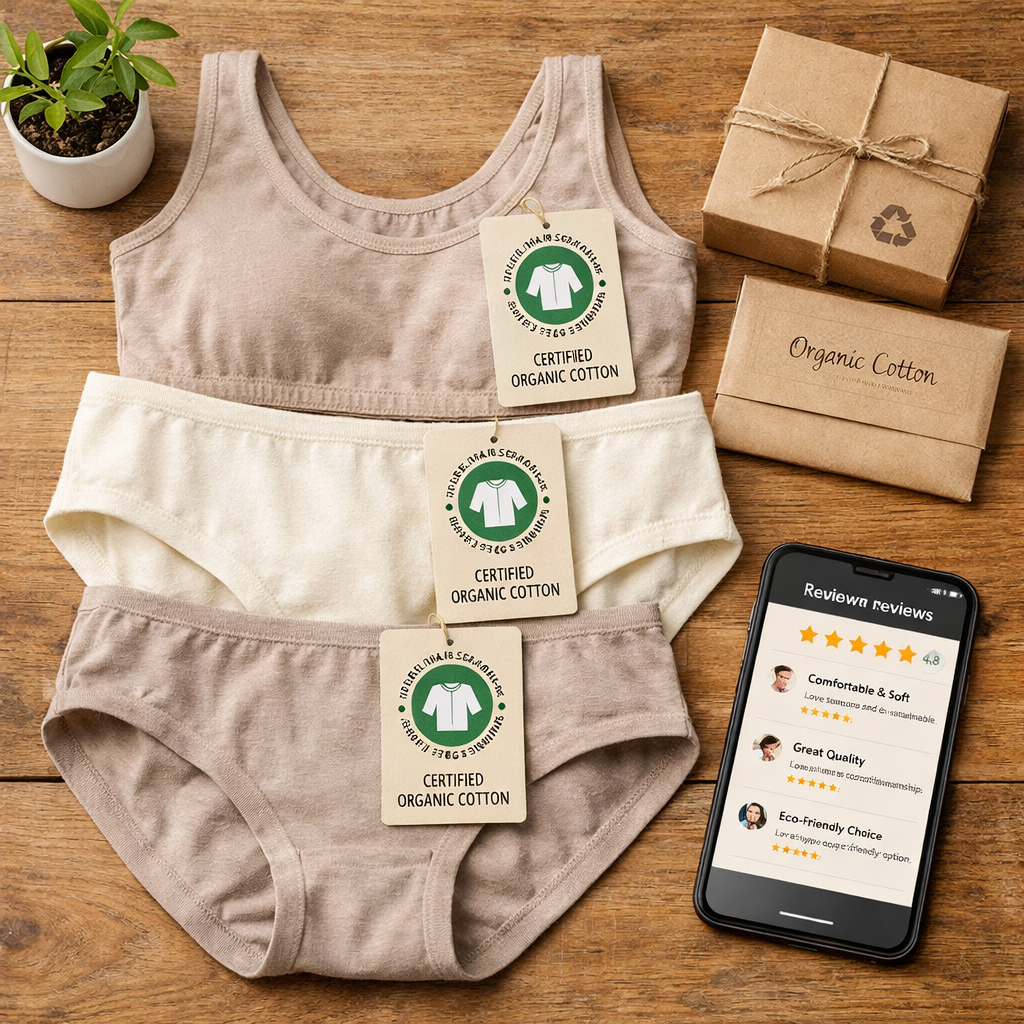
How to Find Organic Cotton Underwear Stores You Can Trust
Organic cotton underwear should feel great and be easy to vet. The fastest way to find trustworthy stores is to look for verifiable certifications, cross-check brands on independent rating platforms, and confirm clear product details before you buy. Below, we share a practical, step-by-step playbook to spot truly organic, skin-safe, and responsibly made pieces—plus where to look and how to verify claims so you can shop confidently and avoid returns.
Start with a focused shortlist
Start with the decision triad: certifications + independent ratings + brand transparency. This beats vague “eco” claims because each layer adds proof—certifications verify standards, ratings validate ethics, and transparency shows receipts from factory to product page, as outlined in this guide to vetting ethical underwear brands (coliecolingerie.com).
Use this shortlist to narrow options quickly:
- Curated ethical marketplaces—such as Wear Style Corner—that display certification badges and certificate numbers
- Brand sites that show GOTS labels and link to certificates
- Retailers listed in the GOTS shop-finder or supplier database
- Stores with strong third-party ratings or awards (e.g., Good On You’s brand ratings)
- Specialty lingerie shops that disclose factory certifications and wage standards
- Size-inclusive retailers with model measurements and clear fit notes
Tip: Use Good On You’s brand ratings to surface better candidates first, then verify claims directly on product pages and certificates.
Verify certifications for real organic claims
“Organic cotton” is cotton grown without synthetic pesticides or fertilizers, commonly chosen for its breathability and comfort on sensitive skin, as this overview of organic cotton benefits (oreateai.com) explains. Certifications create accountability across farming, processing, and labor—more than any single “natural” or “eco” label. On Wear Style Corner, certification details (including scope numbers when provided) are listed directly on the product page.
Mini comparison table:
| Certification | What it covers | What to look for on PDPs | How to verify |
|---|---|---|---|
| GOTS (Global Organic Textile Standard) | Organic fiber integrity plus environmental and social criteria from farm to final packaging | Label grade (Organic ≥95% or Made with Organic ≥70%), fiber split, scope/cert number | Search the Global Organic Textile Standard (GOTS) public database/shop-finder |
| OEKO-TEX Standard 100 | Tests finished textiles for harmful substances (pesticides, heavy metals, formaldehyde) | Standard 100 label, article/class info | Check label details; ensure the claim appears on the exact product color/style |
| Fair Trade Certified | Independently verifies fair wages, safe conditions, and community funds | Factory or program certification on product or CSR pages | Look for certificate/program details and factory info linked from the brand |
Record any certification numbers and verify when possible—especially with GOTS’ public tools.
GOTS for organic fiber and processing
GOTS is widely considered the gold standard because it validates organic integrity and responsible processing from farming to final packaging, with environmental and social criteria at each step (Global Organic Textile Standard). Product labels matter: “Organic” requires at least 95% certified organic fibers; “Made with Organic” requires at least 70%—see GOTS label grades explained (gurlgonegreen.com). Favor brands that display a scope or transaction certificate number and link to verification.
OEKO-TEX for chemical safety
For intimate wear, chemical safety is non-negotiable. OEKO-TEX Standard 100 independently tests finished textiles for harmful substances, including pesticides, heavy metals, and formaldehyde, helping ensure skin safety (how to spot authentic organic cotton lingerie). When possible, choose pieces that combine GOTS (organic content and responsible processing) with OEKO-TEX (chemical screening) for comprehensive assurance.
Fair Trade for worker protections
Fair Trade Certified signals that workers earn fairer wages in safer conditions and communities benefit from development premiums. Many responsible brands list factory certifications on product pages or in CSR sections; look for those details and verify them. When all three—GOTS, OEKO-TEX, and Fair Trade—appear together, you get stronger coverage across content integrity, skin safety, and labor standards.
Check independent ratings and audits
Third-party platforms reduce guesswork. Start with Good On You’s brand ratings (Good On You’s brand ratings) and look for stronger scores on labor and environment. Editorial “best of” lists and long-term tests—like these editor-tested ethical lingerie roundups (editor-tested ethical lingerie roundups)—can validate comfort and durability claims in real use. Some curators also label take-back programs, compostable options, and carbon-neutral shipping; this guide to eco-friendly organic cotton underwear brands (guide to eco-friendly organic cotton underwear brands) is a helpful reference point for those features.
Review brand transparency and traceability
Supply-chain transparency means publicly sharing where and how products are made—factory locations, audit results, and material sourcing. Better transparency increases accountability and trust. Look for:
- Published factory lists or supplier maps
- Annual sustainability or impact reports
- Explanation of living-wage progress and audit outcomes
- Clear labeling of certifications with numbers and scope
Weigh influencer/editor content alongside independent ratings and disclosures; a primer on sustainable basics and transparency (primer on sustainable basics and transparency) covers why open sourcing builds credibility.
Evaluate product pages for fit, fabric, and care
Use a quick checklist before adding to cart:
- Fiber breakdown and elastane percentage
- Certification badges and certificate numbers
- Size range, inclusive fit notes, and model measurements
- Rise, coverage, leg opening, and waistband construction
- Care instructions and return policy for intimates
Organic cotton benefits include breathability, a soft handfeel, and gentle wear for sensitive skin; high-quality pieces often soften and stay durable over many washes (oreateai.com). Match the cut to use:
| Cut | Stretch feel | Best for | Care tip |
|---|---|---|---|
| Brief | Moderate stretch, full coverage | Everyday comfort, workdays | Cold wash to maintain shape |
| Hipster | Moderate stretch, mid-rise | Daily wear, under mid-rise bottoms | Avoid high heat to protect elastane |
| Boxer/Shorty | Softer stretch, longer leg | Lounging, sleep, light movement | Reshape and lay flat to dry |
| Bikini | Light-to-moderate stretch | Versatile daily wear | Use a lingerie bag to reduce friction |
| Thong | Light stretch | Seamless lines under fitted clothes | Skip fabric softener to retain recovery |
Fiber content and elastane percentage
Check exact fiber splits (e.g., 95% organic cotton, 5% elastane). A small elastane content supports stretch and fit recovery, especially at the waistband and leg openings. Organic farming typically avoids GMOs, synthetic pesticides, and herbicides; pairing GOTS with OEKO-TEX adds both content integrity and chemical safety assurance. Note that organic production can be 10–50% pricier due to labor-intensive farming and certification costs, which may impact retail pricing.
Size range and inclusive fit guidance
Look for full size charts with body measurements and model fit notes. Favor inclusive sizing and any unisex or gender-inclusive fits. Fit clarity reduces returns—call out:
- Rise (low/mid/high), leg opening, and coverage preferences
- Activity guidance (daily wear, lounging, light workouts)
- Stretch notes and waistband construction (e.g., heat-bonded seams for sensitive skin)
Care instructions and durability cues
Care for longevity:
- Cold wash, gentle cycle, mild detergent
- Air dry or low heat to preserve elastane recovery
- Note dye and trim safety (e.g., OEKO-TEX–tested) for sensitive skin
- Review warranty or defect policies and how returns are handled for intimates
High-quality organic cotton typically softens and remains durable over repeated washes (oreateai.com).
End-of-life programs and packaging details
Responsible retailers increasingly offer take-back or recycling and sometimes compostable underwear programs; look for those notes in the sustainability section (guide to eco-friendly organic cotton underwear brands). Packaging should list materials and disposal instructions (recycled, recyclable, or compostable), and some stores provide carbon-neutral shipping.
Validate social proof and editorial mentions
Combine verified certifications with social reviews to confirm real-world performance. Seek:
- Verified-buyer reviews mentioning softness, stretch recovery, and fit accuracy
- Long-term editor tests for durability claims (editor-tested ethical lingerie roundups)
- Clear disclosures on any paid partnerships to contextualize praise
Test before you invest
Minimize risk with a one-pair trial:
- Wear, wash 3–5 times, then assess softness, waistband recovery, and colorfastness
- Scale to multipacks once fit and care feel dialed
Quick pre-commit checklist:
- Fits true-to-size with no irritation
- Retains shape after washing
- Care is simple and low-heat friendly
- Certifications and certificate numbers verified
Why shop organic cotton underwear at Wear Style Corner
We curate verified, everyday-rotation basics with inclusive sizing, clear fit notes, and responsible-material filters—so you can find your best pair faster. Expect transparent product pages with fiber splits, certification callouts, and practical care guidance. With fast shipping, hassle-free returns, and responsive support, trying new fits and styles is simple. Explore our latest edits at Wear Style Corner (https://wearstylecorner.com).
Curated, verified materials and clear labeling
You’ll see GOTS, OEKO-TEX, and Fair Trade callouts surfaced prominently, plus plain-language “what this means” notes and fiber percentages. Use our responsible-materials filters to compare options fast and build a confident shortlist.
Fit notes, inclusive sizing, and style guidance
Every style includes rise, coverage, and stretch notes—plus model measurements and inclusive charts. We add “best for” guidance by activity and climate, and easy mix-and-match suggestions with tees, loungewear, and wardrobe staples for seamless lines under denim, dresses, and workwear.
Fast shipping, easy returns, and responsive support
Get clear shipping thresholds, timelines, and return windows at a glance. Chat with us for fit or material questions, and lean on our care tips to extend garment life. Our hygiene policy enables hassle-free returns for unworn items.
Capsule edits for everyday mix-and-match
Build a practical drawer with seasonal and core capsule edits: breathable neutrals, travel-friendly multipacks, and colorways that pair with your denim, knitwear, and dresses. Bundle pricing and “complete the look” recommendations make outfitting easier.
Frequently asked questions
How can I confirm underwear is truly organic cotton?
Look for a GOTS label with a visible grade and certification number, then verify it in the GOTS database. Wear Style Corner lists these details on each qualifying product.
What certifications matter most when shopping?
Prioritize GOTS for organic fiber and responsible processing, OEKO-TEX Standard 100 for harmful-substance testing, and Fair Trade for worker protections. You can filter for these at Wear Style Corner.
Why do some organic pairs cost more than others?
Organic farming is labor-intensive and certification adds costs, making production roughly 10–50% more expensive; the upside is better traceability, quality, and wage standards. Wear Style Corner highlights key pricing drivers on product pages.
What should I look for in return policies on underwear?
Seek clear windows (30–60 days), hygiene rules for unworn items, and low-friction return methods. At Wear Style Corner, fit guidance and live support help you get sizing right upfront.
Is a little elastane okay in organic cotton underwear?
Yes. A small elastane percentage improves stretch and fit recovery; Wear Style Corner shows exact fiber splits and care notes.