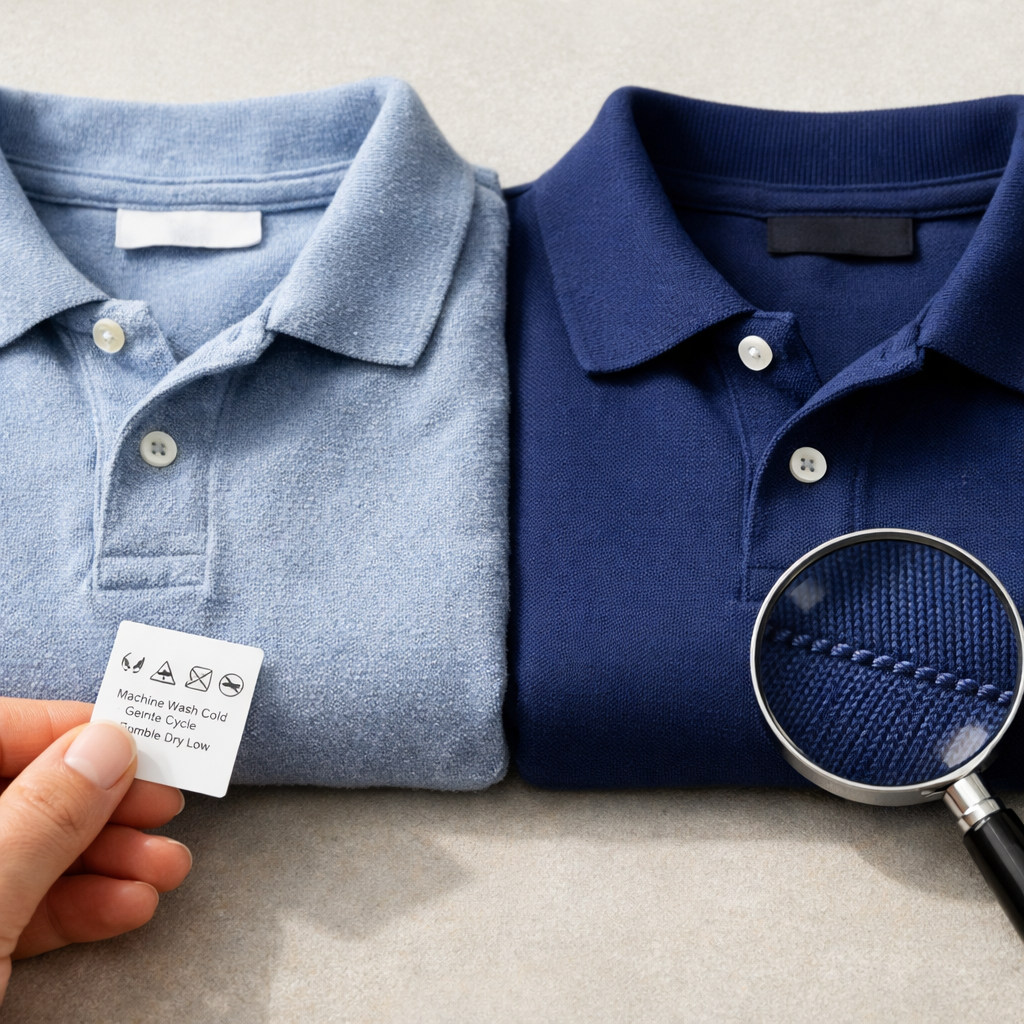
How To Spot Affordable Polos That Don’t Fade Or Pill
A great-looking polo shouldn’t fade, pill, or lose its shape after a few washes—especially if you’re shopping under $60. The secret isn’t one “magic” brand; it’s reading fiber, knit, and construction details like a label pro. Choose extra-long staple cotton for softness without fuzz, or microfiber performance polos for high-wear use. Prioritize piqué knits with disclosed GSM, reinforced seams, and colorfastness testing. Below, we show exactly how to verify longevity signals, compare budget tiers, and shop with confidence so your next affordable polo actually lasts. At Wear Style Corner, we flag these fiber, knit, and construction signals in our polo guides so you can scan quickly and buy with confidence.
Start with fiber content
If you want color that stays true and a surface that resists pilling, fiber comes first. For everyday comfort, a Supima cotton polo (or other extra-long staple cotton) offers a smoother hand and naturally better pill resistance thanks to longer fibers—Supima’s extra-long staple profile is prized for durability and a subtle sheen that holds up in casual rotation, as highlighted in coverage of quality polo brands and fibers on deolax’s best polo shirt brands guide.
For high-wear or uniform needs, microfiber performance polo fabrics (fine-denier polyester or poly blends) are engineered to resist shrinking, snagging, and color loss while remaining quick-dry and easy-care, as explained in this deep dive on why fabric should be your first focus when purchasing a performance polo.
“Extra‑long staple (ELS) cotton uses longer fibers (staples) that twist into smoother, stronger yarns. The result is softer handfeel, less linting, and greater resistance to pilling and fuzzing over time compared to short‑staple cotton, especially when knitted into durable piqué structures.”
Quick comparison of common polo fabrics:
| Material | Durability & pilling | Breathability | Typical price under $60 |
|---|---|---|---|
| 100% ELS cotton (Supima/Pima) | Strong, smooth yarns reduce pilling; color takes dye evenly | Natural breathability; good everyday | Mid-range $35–$60 |
| Regular cotton | Softer value option; can pill/fade faster if short-staple or loosely knit | Natural breathability; may shrink | Budget $15–$35 |
| Microfiber performance polyester | Highly resistant to fading/pilling; resists snags and shrinkage | Moisture-wicking; quick-dry | Budget to mid-range $20–$50 |
| Cotton–poly blends | Balanced durability; pilling risk varies by fiber length and finish | Moderately breathable; lower care | Budget $18–$45 |
Keywords to look for: Supima cotton polo, Pima cotton, performance polo, microfiber polo, colorfast polo.
Check knit density and fabric type
A denser knit keeps color truer and the surface smoother over time. For most budgets, piqué polo knits outperform flimsy jersey: the textured, tuck-knit structure resists cling and holds shape better at the collar and placket than thin jersey options, a point emphasized in Permanent Style’s guide to piqué cotton polo shirts.
How to verify density online:
- Prefer piqué or double piqué over basic jersey for work and casual use.
- Look for disclosed GSM (fabric weight) and even, tight knit texture in close-up photos.
- Seek shrinkage specs (≤5%) and mentions of wash testing.
- Cheaper polos often pair blends with unreinforced rib collars that age poorly—choose reinforced collars with stable ribs instead.
Mini checklist for product pages:
- GSM disclosed
- Tight, consistent knit texture in photos
- Knit described as piqué/double piqué
- Shrinkage spec ≤5%
- Wash test or certification noted
Wear Style Corner roundups note GSM, knit type, and shrinkage targets where available so you can compare options quickly.
Inspect construction quality
Even at budget prices, workmanship details signal longevity:
- Set-on plackets with clean stitch lines
- Bartacked placket bases and reinforced side vents
- Double-needle topstitching at hems and shoulders
- Hand-secured or lock-stitched buttons
Look for seam standards language like ISO 301 lockstitch, durable overlock/coverstitch on seams, and AQL inspections (ANSI/ASQ Z1.4) as a quality screen. Avoid simple ribbed collars that curl; reinforced collars (or rib with stabilizing core yarns) keep their edge crisp.
Image callout — Where to spot reinforcements:
- Bartacks: small, dense stitches at the base of the placket and top of side vents.
- Seams: inside shoulder and side seams should show even overlock/coverstitch; hems should feature straight, double-needle topstitching.
- Collar stand: pinch the collar edge—firmer, slightly structured ribs resist curl.
Verify colorfastness and finishing
Before you buy, verify that the color will hold. Scan descriptions for standardized tests:
- ISO 105‑C06 colorfastness: color should remain stable after five home-laundering cycles.
- Shrinkage under 5% per AATCC 135.
- Pre‑shrunk or compaction finishing to stabilize the knit and limit torque. Benchmarks like these commonly appear in brand quality comparisons and test summaries.
Prioritize brands that publish wash-test notes and third-party certifications like OEKO‑TEX or GOTS as proxies for controlled, consistent finishing.
“Colorfastness is a fabric’s ability to retain its original color when exposed to washing, sweat, light, and abrasion. Standardized methods like ISO 105‑C06 simulate home laundering to rate dye stability. Higher ratings signal better resistance to fading and dye bleeding across repeated washes.”
In our buying guides at Wear Style Corner, we favor products that publish standardized test results and finishing details.
Assess pilling risk
Pilling is the formation of fuzzy fiber balls where abrasion occurs. It’s measured using tests such as Martindale, Circular Locus, and Pilling Box; fabrics with short fibers at the surface, or certain blends, are generally more prone to pilling without proper finishing, as explained in Swavelle’s overview of what causes pilling.
How to reduce risk:
- Choose denser piqué knits with smooth yarns (ELS cotton or microfiber).
- Opt for microfiber performance polos designed with anti-pill properties and color retention in mind.
- Avoid loose, fuzzy surfaces and low-twist yarns.
Questions to ask customer service:
- Which pilling test was used (Martindale, Circular Locus, Pilling Box)?
- What rating did it achieve?
- What is the knit GSM?
- What fiber length/type is used in the face yarn?
Confirm fit and size inclusivity
Durability means little if the fit is off. Look for size inclusive polos with broad size ranges, including big & tall options. Check measurement charts for:
- Rib collar height (too short can curl or look flimsy)
- Sleeve opening (comfort for biceps and movement)
- Body length (tuck-in policies for campus/work)
For daily comfort, technical materials add stretch and breathability without sacrificing polish—a balance many editors highlight when selecting versatile stretch polo picks for different builds and settings in Forbes’ guide to the best polo shirts for men. Consider whether you prefer raglan for mobility or set‑in sleeves for structure. Wear Style Corner fit notes highlight collar height, sleeve opening, and tall options to help you choose the right cut.
Review sustainability signals
You can filter for safer materials and better practices without giving up longevity:
- Third-party standards such as OEKO‑TEX (chemical safety), GOTS (organic content plus processing criteria), and Fair Trade (select labor practices) increase transparency.
- Long-lasting materials like ELS cotton and durable micro‑poly reduce replacement frequency, cutting waste over time.
- Verify care instructions: garments designed for cold wash and line dry typically extend lifespan and reduce energy use.
Definition: Third‑party apparel certifications are independent audits that verify claims about chemical safety, organic content, or labor practices. They don’t guarantee longevity by themselves but increase transparency and reduce risk of undisclosed harmful finishes or inconsistent dye processes.
Wear Style Corner flags third‑party certifications and care requirements in our product roundups to help you filter fast.
Compare price tiers and value
- Budget (under $25): Prioritize uniform‑grade or decoration‑ready polos from mass brands used for workwear and team orders—examples include Gildan, Jerzees, and Hanes, commonly stocked for everyday and uniform polos by multi-brand wholesalers and retailers.
- Midrange ($25–$60): Seek ELS cotton piqué or microfiber performance blends, with disclosed GSM and reinforcements at placket/vents. Favor listings that mention ISO 105‑C06 colorfastness and AATCC 135 shrinkage targets.
- Value tip for logos: Embroidery or prints should withstand at least 30 wash cycles without cracking, peeling, or dye migration—vital for team, campus, and corporate gear.
For vetted under‑$60 options that meet these checks, see Wear Style Corner’s latest polo picks.
Check return and care policies
Minimize risk with clear policies before you commit:
- Confirm return windows, restocking fees, and whether lightly worn/washed test items are acceptable.
- Prefer retailers with prepaid labels or in‑store return options.
Care essentials to preserve color and shape:
- Machine wash cold with mild detergent.
- Hang or lay flat to dry; avoid high‑heat tumble drying—especially for Supima cotton.
- For delicate or designer knits, periodic professional cleaning can remove set-in sweat/odors and help prevent collar curl; always follow the garment’s care label guidance.
Do a one‑shirt wash test
Validate the polo before buying multiples:
- Buy one color you plan to wear most. Photograph it new (color, collar, hems).
- Wash cold with mild detergent; do not overload the machine. Hang dry.
- Repeat for 3–5 cycles.
- Compare photos for color shift, surface fuzz, collar waviness, and measure length/width.
Use ISO 105‑C06 guidance as a benchmark: minimal color change after five washes; target shrinkage under 5%.
Simple scoring table (record after 5 washes):
| Factor | Score (0–5) | Notes (target) |
|---|---|---|
| Color change | 4–5 = excellent retention | |
| Pilling | 4–5 = smooth surface | |
| Collar stability | 4–5 = no curl/waviness | |
| Shrinkage (%) | <5% total |
Where to shop with confidence
Mix channels to balance specs, fit, and easy returns:
- Wear Style Corner for curated, spec‑focused polo picks across sizes and budgets.
- Official brand stores for full sizing charts, GSM, and fiber/finish disclosures.
- Trusted marketplaces with strong seller ratings and clear authenticity notes.
- Big‑box retailers for straightforward return logistics.
- Licensed campus bookstores or team stores for verified logos and decoration quality.
Budget-friendly uniform specialists often optimize for decoration and durability; for example, some teamwear suppliers engineer polos to resist dye migration—important for embroidery clarity. Verification tips:
- Look for OEKO‑TEX/GOTS mentions, clear fiber content, and close-ups of seams and placket.
- Prefer listings that include GSM, knit type (piqué/double piqué), and wash-test notes.
For more on sourcing official gear and styling, see our licensed college apparel guide and coastal wardrobe capsule at Wear Style Corner.
Coastal and campus use cases
- Coastal: Choose quick‑dry microfiber or polyester/elastane blends with breathable knits and UV finish options for long, sun‑heavy days. Prioritize vented side seams, moisture management, and a collar that keeps shape after repeated damp‑to‑dry cycles.
- Campus/team gear: Confirm official licensing for logos and ensure embroidery durability for ≥30 washes. Uniform‑grade polos from value brands can anchor bulk buys. Fit notes: stretch content and comfortable sleeve openings help on active days; tall sizes maintain a clean tuck for dress codes.
Frequently asked questions
Do piqué polos fade less than jersey polos?
Yes. Tightly knitted piqué tends to hold color and shape better than thin jersey, helping affordable polos look newer longer. You’ll find piqué‑first picks at Wear Style Corner.
What fabrics resist pilling the best?
Extra‑long staple cotton and tightly knitted microfiber performance yarns resist pilling best. Denser piqué knits beat looser jersey structures in everyday wear.
How should I wash polos to prevent fading and collar curl?
Wash cold with mild detergent and hang or lay flat to dry. Avoid high‑heat tumble drying; it accelerates fading, shrinkage, and collar curl.
How can I tell if a budget polo will hold its color online?
Check for ISO colorfastness claims, shrinkage under 5%, and piqué knit with higher GSM. Favor listings with certifications and close‑up seam photos.
Are recycled or organic polos as durable as standard options?
Durability depends more on fiber length, knit density, and construction than labels alone. Choose ELS cotton or performance microfiber and verify finishing tests.