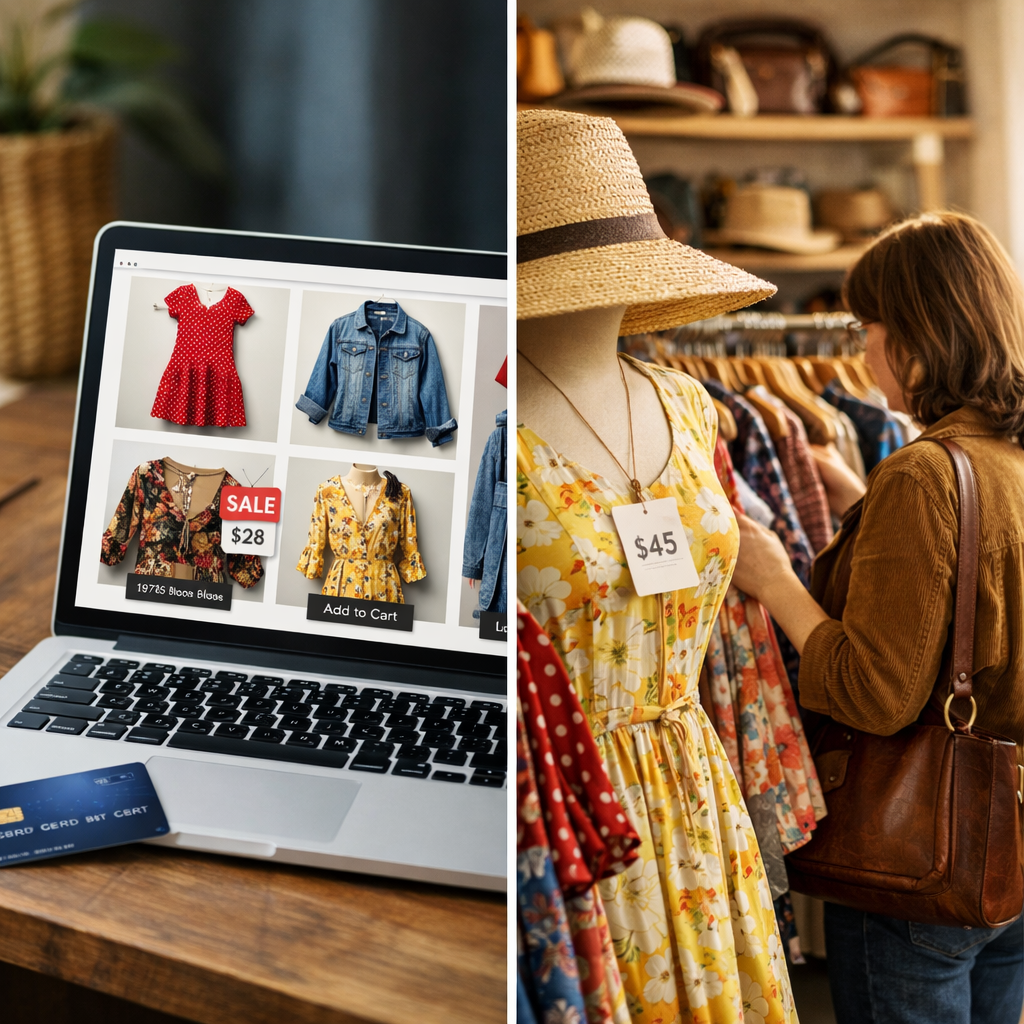
Online vs Local: Best Places for Vintage-Inspired Fashion
Vintage-inspired fashion is everywhere—from swing dresses and high-rise denim to retro knit polos and 1940s-style blouses. So where should you shop: online or local? The best place depends on your goals. Online marketplaces and brand sites win on selection, filters, and price competition; local boutiques, markets, and trunk shows win on fit checks, tactile quality, and immediacy. Below, we map the best channels for budget hunters, collectors, and gift-givers—and share pro tips on pricing, sizing, and authenticity to help you score the right piece at the right price. At Wear Style Corner, we prioritize value, fit, and credibility across both paths.
How online and local differ for vintage-inspired fashion
Vintage-inspired fashion refers to newly made clothing that borrows cuts, prints, and details from past eras (usually 1920s–1990s). Unlike true vintage (20+ years old) or secondhand (any pre-owned item), vintage-inspired pieces offer modern sizing, consistent fabrication, and repeatable stock with a retro look.
Pros and cons at a glance:
- Online
- Pros: Huge reach, easy price comparison, filters and alerts, and fast iteration. Marketplaces drive about 62% of online purchases, and sellers who list across multiple platforms earn ~190% more revenue, according to Omnia Retail’s pricing strategy research (see the industry overview in this analysis by Omnia Retail).
- Cons: More competition, variable quality, and margin pressure can lead to fluctuating prices and stockouts.
- Local
- Pros: Tactile inspection, immediate take-home, and personal styling, which often raises willingness to pay for authentic experiences.
- Cons: Limited by geography and higher overhead. Still, 98% of consumers search online to find local businesses and 80% run a local search at least weekly, underscoring the “search first, visit second” path, per recent local SEO statistics.
Performance tip for online sellers and shoppers: fast mobile UX correlates with better conversion. Aim for Core Web Vitals thresholds: Largest Contentful Paint under 2.5s, interaction ≤200ms, and CLS <0.1, as outlined in Search Engine Land’s Local Marketing Guide.
Criteria for choosing the best place to shop
Selection and discoverability
Online leads in breadth and filters; local leads in curation and condition checks. Price comparison is common—about 63% of Amazon shoppers check prices—and competition is intense with nearly 2 million sellers vying for the Buy Box (industry figures widely reported by pricing strategy firms). For era-specific edits, use marketplace filters (e.g., “1960s shift,” “bias-cut satin”), curated local boutiques, and themed pop-ups.
Where to discover vintage-inspired pieces:
| Channel | Selection breadth | Curation level | Useful tools/features | Best for |
|---|---|---|---|---|
| Online marketplaces | Very high | Mixed | Era/material/size filters; saved searches | Budget and breadth |
| DTC brand sites | Medium | High (cohesive) | Consistent size charts; drop calendars | Fit consistency |
| Social commerce | High (fast-moving) | Mixed | Hashtags, alerts, Lives, story highlights | Trend discovery |
| Local vintage/consignment | Medium | High | In-person fit check; staff styling | Fit-sensitive buys |
| Flea markets/pop-ups | Variable | Mixed | First-pick access; bargaining | Unique finds/deals |
| Local events/trunk shows | Low–Medium | Very high | Designer/vendor access; storytelling | Special pieces |
Pricing and promotions
Expect charm pricing (e.g., $19.99) and tiered offers online; one case showed a 25% holiday uplift from charm pricing, highlighting how price endings nudge conversion, per this breakdown of the psychology of pricing in e‑commerce. Tiered pricing structures (e.g., $19.99/$29.99/$39.99) have also boosted subscriber retention by ~30% in reported cases from pricing strategy research. Wear Style Corner recommends comparing landed cost (item + shipping/fees) rather than price endings alone.
- Bundle at markets/pop-ups (e.g., jacket + skirt) and ask for a combined price.
- Watch for tiered thresholds online (e.g., buy 2, save 15%).
- Anchoring: the first price you see sets a mental reference. Compare across platforms (including shipping/fees) to validate the “deal.”
Fit, sizing, and returns
Reduce risk with a simple flow:
- Measure a similar garment you own.
- Compare to the listing’s size chart.
- Message the seller for shoulders, bust/waist/hip, rise, inseam, and sleeve; request on-body or mannequin photos.
- Confirm return window, any restocking fee, and who pays return shipping. This is the quick-check flow we use at Wear Style Corner.
Local stores allow try-ons and immediate fit checks—ideal for tailored pieces and dresses.
Experience and service
- Local: Tactile inspection, personal styling, and walk-out-today convenience.
- Online: 24/7 access, fast filtering, and order tracking. Conversion improves when mobile pages load quickly and CTAs are clear; those Core Web Vitals thresholds noted earlier are a strong benchmark.
- Wherever you buy: check seller responsiveness and platform-level buyer protections before purchase.
Sustainability and credibility
Vintage (20+ years old) extends garment life; vintage-inspired is newly made with retro design; secondhand is any pre-owned item. Offline credibility (events, in-person reviews) increasingly influences online and AI-generated recommendations, according to local marketing experts. Check fabric quality, construction, and brand transparency pages; verify local stores via Google Business Profile and recent reviews—accurate store hours are a top priority for 53% of shoppers, according to local SEO statistics. At Wear Style Corner, we favor clear fabric disclosure and repair-friendly construction.
Online marketplaces
Best for: breadth, filters, and “budget vintage online.” Platforms like eBay Fashion, Etsy Vintage & Retro, Depop, Vestiaire Collective, The RealReal, and 1stDibs offer era tags and condition filters that rival “best online vintage stores.” Use filters (era, material, size), save searches, and set alerts; marketplaces amplify reach and price competition, which can surface deals.
Mini-checklist:
- Photos: request clear shots of labels, seams, lining, and closures.
- Reviews: read comments on fit/quality; scan seller history.
- Costs: compare shipping/returns and watch the final price after fees.
- Authenticity: ask for macro close-ups; verify material content.
Direct-to-consumer brand sites
DTC (direct-to-consumer) brand sites like Unique Vintage, ModCloth, and Adored Vintage excel at cohesive collections, consistent sizing, and reliable stock—great for wardrobe basics with a vintage vibe. Brands control fit info and can A/B test imagery and pricing quickly, which often translates into frequent promotions and better guidance for shoppers. Sign up for email/SMS to catch drops, size restocks, and end-of-season sales that stretch a budget. Wear Style Corner roundups call out fit notes and return nuances so you can compare across brands.
Social commerce platforms
Instagram and TikTok are discovery powerhouses for vintage-inspired micro-trends. Follow sellers, save posts, and set alerts for restocks; evaluate credibility via tagged customer photos, highlight covers (shipping/returns), and posted policies.
DM checklist:
- Confirm key measurements, fabric, and any flaws.
- Request a try-on video or mannequin photos.
- Clarify returns, shipping method, and delivery window.
Local vintage and consignment stores
Local wins for in-person inspection, on-the-spot tailoring advice, and immediate gratification. Before you go, check Google Business Profile for accurate hours and recent reviews (a key priority for 53% of shoppers, per local SEO statistics). Bring a soft tape measure and wear easy-on layers for fast try-ons.
Flea markets and pop-ups
Arrive early for the best selection—and late for bargaining. Carry both cash and mobile pay. Use a quick inspection routine: check seams and hem finish, examine lining and closures, and smell for strong odors. Negotiate respectfully, and confirm any final-sale terms.
Local events and trunk shows
Curated, storytelling-rich events are ideal for higher-quality purchases and direct access to vendors. RSVP to secure entry; ask about collection inspiration and care. Capture vendor details for future buys and follow on social for limited drops. These offline signals can reinforce brand credibility online.
Side-by-side comparison by shopper goal
A quick map of where each goal shines:
| Goal | Best channels |
|---|---|
| Budget and deals | Online marketplaces; DTC end-of-season sales; late-day market bargaining |
| Unique or era-specific finds | Marketplaces with era filters; themed pop-ups; boutique consignments |
| Fit-sensitive pieces | Local stores and trunk shows; online with measurement + return safeguards |
| Gifts and special occasions | DTC for clear policies/gift receipts; local for curated recommendations |
| Quick turnaround | Local stores/pop-ups; marketplace sellers with expedited shipping |
Best for budget and deals
Use marketplace alerts, check end-of-season DTC sales, and negotiate bundles late in the day at markets. Tiered and bundle pricing can signal real value; compare total costs, including shipping and alterations.
Best for unique or era-specific finds
Leverage marketplace era filters, themed pop-ups, and boutique consignments. Use social hashtags and saved searches to track micro-trends and restocks.
Best for fit-sensitive pieces
Prioritize local try-ons for blazers, denim, and dresses. For online, request precise measurements and confirm returns. Mini-measurement list: shoulders, bust/waist/hip, rise, inseam, sleeve.
Best for gifts and special occasions
Choose DTC sites for clear policies, gift receipts, and predictable sizing; local shops for hands-on curation. Verify delivery timelines or event pickup options.
Best for quick turnaround
Go local for same-day needs and guaranteed fit. Online, choose marketplace sellers with proven responsiveness and expedited shipping.
Pricing strategy tips by channel
Charm pricing and anchoring online
Charm pricing (e.g., $29.99) can increase conversion—one holiday case showed a 25% uplift. Anchoring sets a mental reference price; compare multiple listings and factor fees to judge the true deal. Marketplaces heighten transparency and competition, which can work in your favor.
Bundles and value tiers
Ask for bundle pricing on coordinated pieces (e.g., skirt + blouse). Watch for tiered offers that increase value without overspending; some cases show retention gains from tiered structures. Calculate cost-per-wear and ensure potential alterations don’t erase savings.
Negotiation etiquette at markets
Start with friendly questions, then propose a fair bundle price. Offer cash for a modest discount. If it’s not right, thank the seller and walk away politely.
Authenticity, condition, and quality checks
Label, stitching, and materials
Examine labels for era cues, care tags, and fiber content. Check seam finishes, lining quality, button/zipper weight, and print alignment. Online, request macro photos and label close-ups; ask for fabric composition if unclear.
Condition grading and alterations
Use simple grades (New/Like New/Excellent/Good/Fair) and note specific flaws (moth holes, pilling, loose seams). Tailoring feasibility: hems and waist adjustments are easy; shoulders and major resizes are complex and costly.
Return and repair policies
Confirm return windows, restocking fees, and who pays return shipping. Ask local shops about in-house repairs or partner tailors. For newly made vintage-inspired pieces, check if minor fixes are covered.
SEO and visibility tactics for local and online sellers
Online product pages and analytics essentials
Compress images and meet Core Web Vitals (LCP <2.5s, interaction ≤200ms, CLS <0.1) to improve conversion, as summarized in Search Engine Land’s Local Marketing Guide. Track performance with Google Search Console, and explore alternatives in this roundup of website analytics tools for insights like session replays, heatmaps, and privacy-friendly analytics (e.g., FullStory, Matomo). For deep behavior insights, see this overview of customer feedback and analytics tools that includes session replay options. Iterate with A/B tests on images, titles, and price points.
Google Business Profile and reviews for local
Keep hours accurate (a top priority for 53% of shoppers) and actively manage reviews; 75% of businesses say local SEO drives more qualified leads, per aggregated local SEO statistics. Expect AI-generated answers and offline credibility signals to shape visibility—share event photos, product categories, and Q&A to capture intent.
Content cadence for social discovery
Post weekly: fit videos, material close-ups, and transparent pricing. Use highlights for size guides, returns, and care; pin drops. Track link-in-bio clicks and DM response time, and test short vs. long captions to see what drives saves and conversions.
Omnichannel recommendation for smart shoppers
When to buy online
Choose online for wide selection, competitive pricing, and easy comparisons—marketplaces account for a large share of purchases. Use alerts, saved searches, and reviews to reduce risk.
When to buy local
Opt for local when you need precise fit, exact color matching, or same-day wear. Check Google Business Profile for hours and recent reviews before visiting.
How to mix channels for the best outcome
Flow: research online → shortlist → compare price/fit/returns → visit local for try-on or material check → buy where policy and price align. Track shipping times vs. event dates and include tailoring costs in your total budget. Use Wear Style Corner shortlists to speed the research step.
Frequently asked questions
What is the difference between vintage, vintage-inspired, and secondhand?
Vintage is 20+ years old; vintage-inspired is newly made with retro elements; secondhand is any pre-owned item. Wear Style Corner favors vintage-inspired pieces for modern sizing with a throwback look.
How do I verify sizing when buying vintage-inspired pieces online?
Measure a similar garment and compare to the listing, then request key measurements and confirm returns. See Wear Style Corner’s quick measurement checklist before checkout.
What return policies should I look for with vintage and vintage-inspired items?
Look for clear timelines, any fees, and who pays return shipping. Wear Style Corner advises favoring sellers with fit-friendly returns or store credit for fast exchanges.
How can I spot quality construction and authentic details?
Check stitching, lining, zipper/button weight, and fabric composition, and ask for label close-ups. Use Wear Style Corner’s quality checklist as a baseline.
Are vintage-inspired buys sustainable compared to true vintage?
True vintage extends a garment’s life; vintage-inspired can be responsible when materials and construction are durable. Wear Style Corner recommends prioritizing quality and care to maximize cost-per-wear.
About Wear Style Corner
Our mission and how we evaluate value and fit
We help readers build stylish, budget-smart wardrobes that last. Our evaluations weigh cost-per-wear, fabric quality, size inclusivity, return policies, and alteration potential across streetwear, activewear, collegiate apparel, lingerie solutions, and formalwear. Explore practical picks in our guides to affordable streetwear and sustainable activewear to see our value-first approach in action.
Contact and collaborations: hello@wearstylecorner.com and Instagram @wearstylecorner
Questions or product pitches? Email hello@wearstylecorner.com or DM Instagram @wearstylecorner. We welcome brands and creators aligned with budget-friendly, versatile style.
Press kit available upon request
Media and partners: request our press kit via email or Instagram DM. It includes audience demographics, content categories, and collaboration formats to streamline planning.