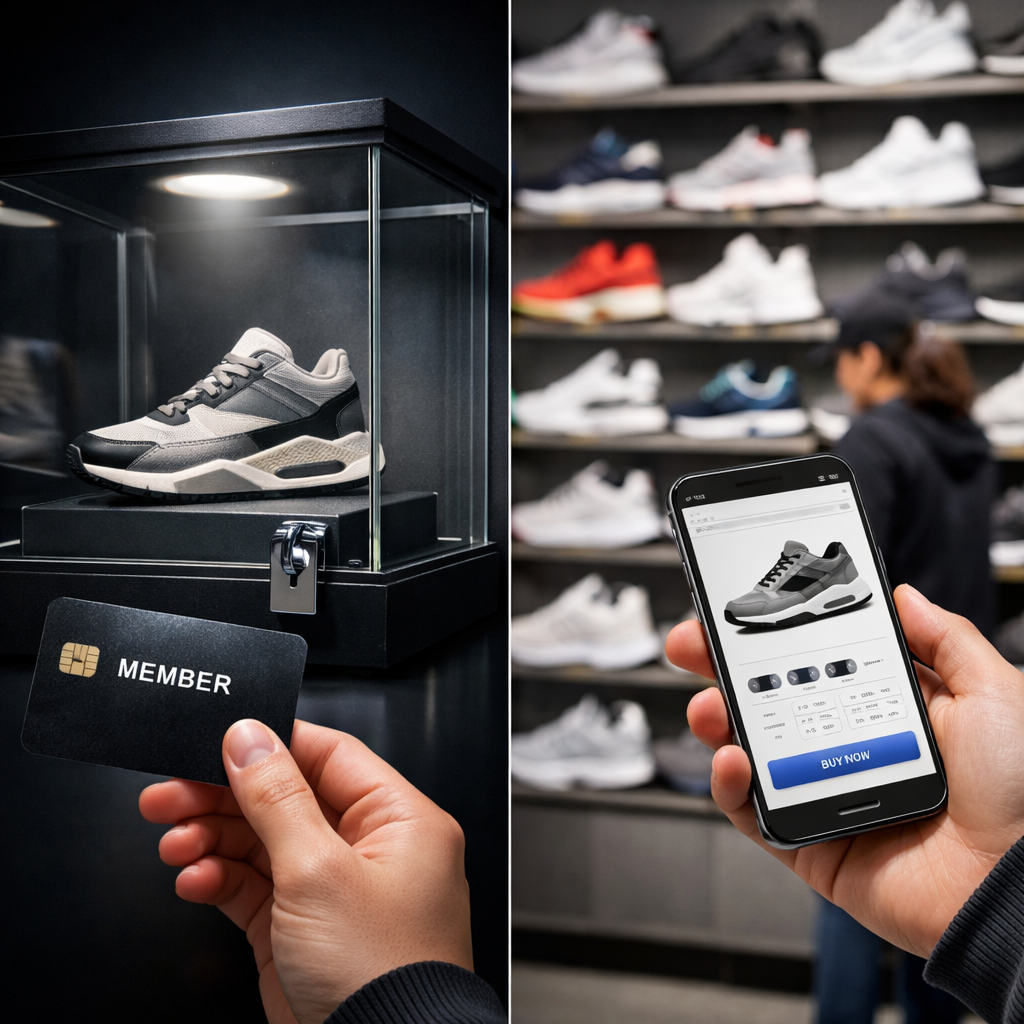
Top Brands’ Exclusive Sportswear Drops: Members-Only Access vs Public Releases
Limited edition sports apparel drops come in two primary flavors: exclusive drops and public releases. An exclusive drop is a limited, gated launch offered to members-only access lists, often with VIP presale windows and curated perks. A public release is open to everyone, typically through a brand’s site and retail partners, with demand driven by timing, quantities, and marketing. This guide explains how and why top brands use each model, how to buy smart, and what matters most—fabric quality, fit consistency, durability, style versatility, and cost-per-wear—especially for students and value-focused shoppers. At Wear Style Corner, we prioritize fit, fabric, and long-term value over hype.
How exclusive drops work
Members-only drops are limited runs offered to a closed audience through tiered memberships across basic, premium, and VIP levels. Tiered access levels offer escalating benefits—think early access, exclusive edits, and expert sessions—plus occasional events and curated content, all exchanged for recurring fees in a structured program grounded in community vs membership models (see this overview of community vs membership models).
Exclusivity is created by producing limited quantities and gating access. Common perks include:
- Early access windows (e.g., VIP presale 48 hours prior), rare colorways, and members-only sizes
- Member events such as workshops, masterclasses, and priority Q&A with product experts
- Content and styling guides aligned with seasonal collections
“Memberships trade exclusive curated content and experiences for recurring fees; communities emphasize peer connections while memberships center creator-to-audience value.”
What public releases mean
Public releases are open-to-all launches designed for reach and retail distribution. They drive demand with timed drops, limited quantities, and marketing rather than gated access, and they fit brands seeking broad awareness across e-commerce and wholesale. They must also handle inventory planning and site stability at scale—typical member platform operational trade-offs can inform these choices (see member platform operational trade-offs). Wear Style Corner drop alerts surface both brand-site and retail-partner releases so you can plan.
Consumer upsides include:
- Simpler checkout path and multiple retailer options
- Higher odds of restocks and, later, markdowns
- Easier returns and broader size replenishment cycles
Access and scarcity
Scarcity levers differ by model:
- Members-only: paywalls, tiering, and VIP presale windows create reliable early access and reduce last-minute scramble.
- Public releases: limited quantities, timed drops, and campaign hype spark demand spikes and faster sellouts during peak minutes.
Mini comparison
| Model | Gate | When to act | Risk of sellout |
|---|---|---|---|
| Members-only | Membership tier/log-in | During VIP/member windows | Medium |
| Public | None | Drop minute and day-one | High |
| Hybrid | Tier first, then open | Presale if member; T-0 if not | Medium–High |
Presale is a time-bound early purchase privilege reserved for top tiers, typically 24–48 hours ahead of public launch. It often bundles priority service, exclusive edits, and event access to reward loyalty and improve odds of securing high-demand sizes.
Community and retention
Memberships foster recurring engagement—events, content, and expert access—which improves retention and lifetime value but requires ongoing investment in programming and thoughtful moderation. When done well, this creates smoother access, better product education, and higher post-purchase satisfaction.
Retention mechanics we see working:
- Quarterly workshops, masterclasses, and office hours that teach fit, care, and performance use
- Content drops aligned with seasonal lines (summer kits now, plus our upcoming 2026 denim edit testing calendar)
- Priority support queues for exchanges and size swaps
Community elements vs membership elements:
- Community: peer exchange, user-generated feedback, style sharing, meetups
- Membership: paid access, presale windows, curated content, expert time, exclusive drops
Pricing and monetization
Tiered fees capture premium willingness-to-pay by selling capacity and priority rather than entirely different products—people pay to secure reliable access and uninterrupted benefits (capacity and priority as premium levers). That’s why VIP presale sits at the top of many programs.
Tiered pricing uses escalating levels of benefits and functionality to segment customers and motivate upgrades; the structure clarifies value at each tier while preserving a viable entry point (guide to SaaS tiered pricing).
Platform realities matter: member platforms often rely on third-party add-ons for events, queues, and analytics, raising total cost of ownership that can pass into product pricing (see member platform operational trade-offs). Per-user pricing can limit upsell potential and invite login sharing, so brands weigh these risks when setting membership fees (per-user pricing pitfalls).
Operational complexity
Membership programs require tight integrations (checkout, queueing, CRM), consistent content/event delivery, and stronger customer service. Many brands use third-party tools, which add costs and fragmentation risk (see member platform operational trade-offs). Public releases simplify gating but demand robust inventory planning, site capacity, and retailer coordination at scale.
Recommended launch flow:
- Plan assortment and forecasts
- Allocate inventory across tiers (VIP → members → public)
- Test platform, queue, and payment capacity
- Staff support and social monitoring
- Measure sell-through, waitlists, and size gaps
Hybrid models that blend exclusivity and scale
A hybrid drop model combines loyalty perks with broad reach: members get presale priority, followed by a public release. Example cadence: T-48h VIP, T-24h Members, T-0 Public. Benefits include community goodwill and PR reach; risks include fairness perceptions and forecast errors. Hybrids fit brands balancing monetization of superfans with growth and awareness.
Value factors for shoppers
Use this checklist to buy for longevity, not just hype:
- Fabric quality and performance
- Fit consistency and size range
- Durability and construction
- Style versatility
- Return policy and access reliability
- Resale risk and total cost-per-wear
Spec table for quick evaluation
| Spec | Why it matters | How to verify |
|---|---|---|
| Fiber content | Drives feel, breathability, and strength | Check label; compare blends (e.g., nylon/elastane for stretch) |
| Knit/weave density | Affects opacity, structure, and durability | Hold to light; note GSM/oz if listed |
| Moisture management | Comfort in heat/workouts | Look for wicking tests or lab claims; read product QA |
| Stretch and recovery | Fit retention over time | Manual stretch test; scan reviews for bagging at knees |
| Construction details | Seams/stitching prevent failure | Inspect flatlock vs overlock, bartacks at stress points |
| Fit consistency | Reduces returns and mis-sizing | Compare size chart to your measurements and past seasons |
| Return window | Safety net for limited buys | Confirm days and restock fees |
Fabric quality and performance
Call out fiber blends, knit density, moisture-wicking claims, and stretch recovery. Ringspun cotton typically feels softer and stronger than open-end cotton due to longer, twisted fibers that resist pilling. Performance fabric blends manage moisture, temperature, and movement using engineered fibers or constructions; look for breathable knits, durable finishes, and tested stretch/recovery. In summer, prioritize lightweight, wicking tees and shorts that dry fast during heat and travel.
Fit consistency and size range
Compare brand size charts to your own measurements and note if fits are consistent across seasons. Check for tall, short, and plus options; understand unisex versus gendered patterns, shoulder and sleeve grading, and expected shrinkage from wash care. This reduces returns and missed sizes during fast sellouts.
Durability and construction
Inspect seams (flatlock for low-chafe activewear; dense overlock for edges), stitch density, bartacks at pockets and hems, and abrasion resistance in high-friction zones. Our durability tests emphasize repeated wash/wear cycles, pilling checks, and colorfastness. Longer lifespan lowers your cost-per-wear and supports frequent campus-to-gym rotation.
Style versatility for campus and everyday wear
Choose versatile colorways (navy, black, heather grey, earth tones) and clean silhouettes that pair with denim, joggers, and polos. Layer a breathable tee under a campus hoodie and shell for lecture halls, then swap to running shorts for the gym. For casual Fridays, mix a limited top with classic dark denim and minimalist sneakers.
Cost per wear and budgeting tips
Cost per wear = Price ÷ Expected wears. A $120 hoodie worn 60 times costs $2 per wear and can beat a $60 hoodie that fades or bags out after 15 wears ($4 per wear). Budget smart: set retailer and Wear Style Corner alerts, prioritize core layers over bold one-offs, and use hybrid drops to target later public markdowns.
College apparel and graduation gift ideas
Build a campus capsule with a durable hoodie, a performance tee 2-pack, stretch denim with reliable recovery, and a light weatherproof shell. Favor brands with consistent fits and generous return windows. Great gifts include a short-term VIP presale membership, limited school-color editions, and versatile accessories (caps, belts, commuter packs) that deliver high cost-per-wear.
Seasonal shopping notes for summer and upcoming denim edits
For summer, pick breathable knits, mesh paneling, and moisture-wicking tees/shorts that dry quickly in travel. Looking ahead to our 2026 denim edit, we’re testing stretch, recovery after 10+ wears, and dye fastness. Pair limited tops with everyday denim to keep outfits balanced and budget-friendly.
Brand playbooks at a glance
Members-only drops
| Access rules | Benefits | Risks | Best for | Buying tips |
|---|---|---|---|---|
| Gated tiers; queued checkout | Higher odds on rare items; curated content; events | Fees; tool complexity may raise prices | Superfans, collectors, niche sports | Lock your size/fit baseline; verify perks you’ll use |
- Ideal if you want exclusive drops and consistent early sizing access.
Members-only VIP and presale
| Access rules | Benefits | Risks | Best for | Buying tips |
|---|---|---|---|---|
| Top tier, time-bound early windows | Capacity/priority upgrades; reliable early access | Higher fee for marginal time gains | High-value, must-wear targets | Upgrade only if timing meaningfully boosts your odds 50+ wears |
- VIP presale is about paying for priority and reliability within tiered pricing structures.
Public releases
| Access rules | Benefits | Risks | Best for | Buying tips |
|---|---|---|---|---|
| Open to all | Simple checkout; multiple retailers; markdown potential | Launch-day sellouts; size gaps | Deal-seekers, casual fans | Set alerts; consider alt colorways; revisit in 2–4 weeks |
- Monitor multiple retailers, Wear Style Corner alerts, and restock trackers on drop day to improve odds.
Hybrid cadence
| Access rules | Benefits | Risks | Best for | Buying tips |
|---|---|---|---|---|
| Members presale → public release | Loyalty goodwill + PR reach; better forecasting signals | Tier fairness; inventory allocation | Brands balancing scale and loyalty | Join low-cost tiers for size access; target public restocks |
- Transparent timelines keep goodwill high while capturing broader demand.
Recommendation by brand maturity and goals
If you have a strong, engaged fanbase and the resources for events and content, members-only or hybrid can monetize loyalty and command a premium. If growth and simpler operations are priorities, lean public or hybrid (members presale, then public) and let operational readiness guide the choice.
For shoppers: pick models that match your priorities—VIP if sizing is scarce and you’ll wear the piece 50+ times; public if you’re deal-hunting and flexible on colorways.
How we evaluate drops and releases
We score by fabric quality, construction/durability, fit consistency and size range, style versatility, access reliability, and cost-per-wear. Methods include wash/wear testing, seam and stitch inspections, size and shrinkage verification, and tracking sell-through by access model. Our POV is value-first, practical, and student-friendly, with seasonal testing cycles and a denim-specific program ahead of 2026.
Frequently asked questions
What do members-only drops include and are they worth the fee?
Members-only drops often include early access windows, exclusive edits, and occasional events or expert Q&A. At Wear Style Corner, we say they’re worth it if the perks help you reliably secure pieces you’ll wear 50+ times.
How can I improve my odds of getting early access without overspending?
Choose a low-cost tier that still grants presale access, set size and color priorities in advance, and use Wear Style Corner drop alerts. If you miss, target the public release or the first restock window.
When do public releases typically restock or get discounted?
Many restock within 1–3 weeks; initial markdowns can appear after early sell-through data stabilizes. Monitor multiple retailers or Wear Style Corner alerts and revisit 2–4 weeks post-launch.
Do exclusive drops have better materials or just limited quantities?
Sometimes both, but not always. At Wear Style Corner, we recommend judging fabric quality, construction, and fit consistency first—exclusivity alone doesn’t guarantee better materials or durability.
What is the best way to calculate cost per wear for limited releases?
At Wear Style Corner, we use price ÷ expected wears. A $120 hoodie worn 60 times costs $2 per wear, which can beat a cheaper hoodie that wears out quickly.
How to follow Wear Style Corner for alerts and buying advice
- Follow @wearstylecorner on Instagram or email hello@wearstylecorner.com for drop alerts and seasonal edits.
- Sign up for campus-oriented guides and our upcoming 2026 denim recommendations.
- Add product trackers and calendar reminders for hybrid presales and public release dates.